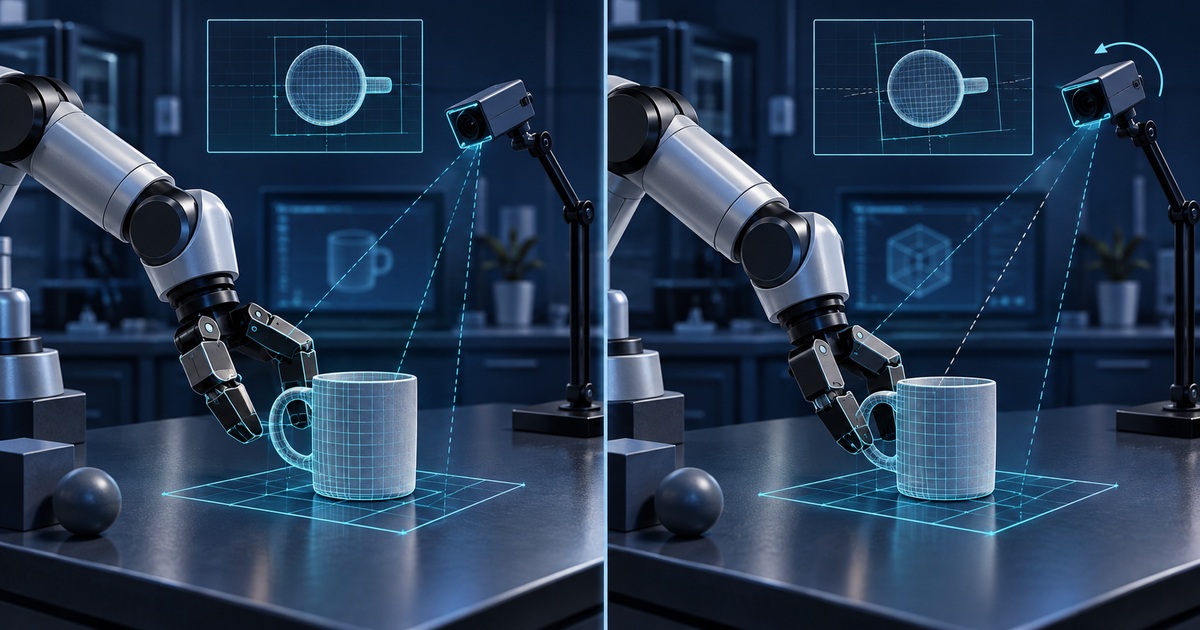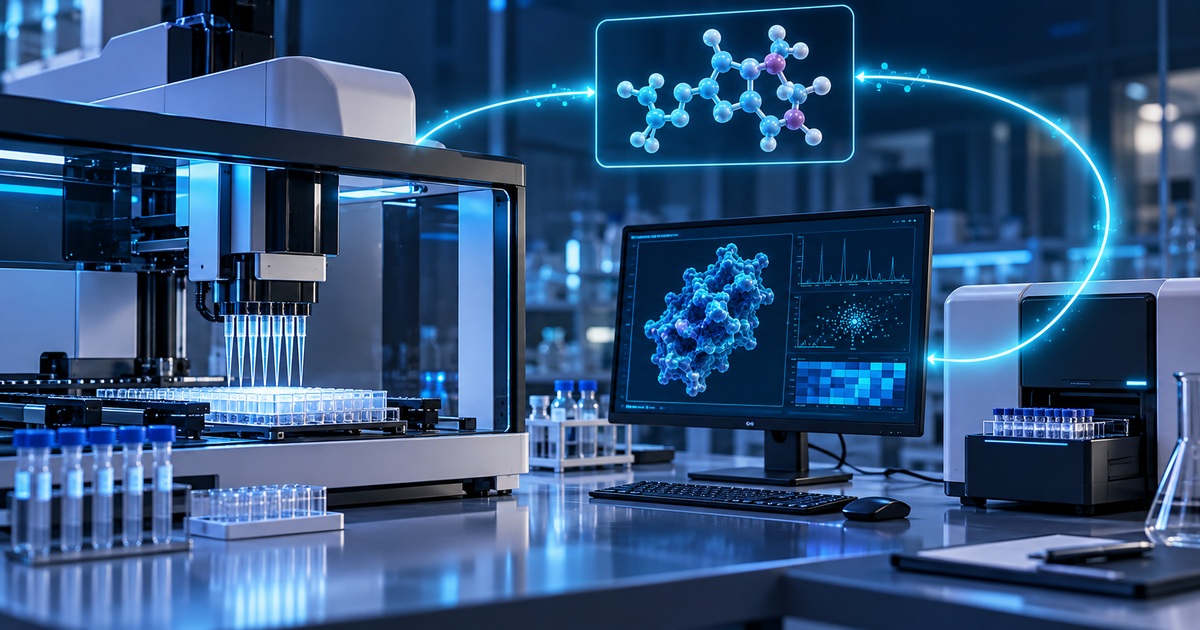
Danaher announced a collaboration with NVIDIA on October 14, 2026, connecting scientific instruments, laboratory software and AI computing. Initial work concerns a selected group of instruments. DGX Spark, RAPIDS and BioNeMo are named, while digital twins are an area for exploration. The stated goal is for experiments to improve models and models to guide subsequent experiments. The announcement is not evidence of a completed autonomous laboratory.
A prediction and a measurement are different outcomes
Our editorial interpretation is that a useful AI workflow must preserve the distinction between a proposed hypothesis and an observed fact. A computer model may rank possible candidates for testing. A measurement, however, should be connected to the actual sample, conditions and instrument. If that information is missing, an attractively computed prediction cannot become experimental evidence.
One explanatory scenario is a team comparing several preselected candidates. AI proposes a testing order, an operator authorizes safe procedures, an instrument records results and a specialist assesses deviations. This is our illustration of a possible workflow, not a description of a system already deployed by a Danaher customer.
The computing layer has a specific role
NVIDIA's CUDA-X documentation describes GPU libraries for tabular processing, machine learning and graph analytics, including cuDF, cuML and cuGraph. This context explains the kinds of software operations involved; advertised speedups on that page are not measured outcomes of the new partnership.
In our analysis, fast computing is only one part of total elapsed time. Sample preparation, the physical experiment and quality checks remain separate stages. We would compare the complete workflow, including data transfers and repeated measurements. Shortening one operation does not establish the same reduction in time to a scientific conclusion.
Choose the model for the task
The BioNeMo overview we read distinguishes tools for training and customizing biomolecular models from services for running prepared models. The page is marked as older documentation, so we use it for the general distinction, rather than as a current version list or a compatibility guarantee.
The practical question, in our interpretation, is what must change for the specific scientific task. Sometimes running an existing model may suffice; elsewhere, new data and validated customization are needed. A team should preserve the version, data provenance and acceptance criteria. Otherwise, repeating an experiment could involve different software without that change appearing in the record.
How to assess the promise
Scientific value is not the number of automatically suggested candidates. We would look for reproducible measurements, control conditions and clearly described unsuccessful attempts. A useful system should also report when it lacks adequate grounds for another step, instead of continuously producing confident recommendations.
The collaboration matters as a proposed direction for connected laboratory infrastructure. It does not yet establish that a therapy was developed faster or that human scientific judgment has been replaced. The next verifiable questions are which instruments are connected, what data they exchange and which results independent teams can reproduce. Until then, we describe a collaboration and its goals, keeping experimental evidence at the center of the story.
Sources: Danaher — collaboration with NVIDIA, NVIDIA — CUDA-X data science, NVIDIA — BioNeMo framework overview.
Editorial verification: 2026-10-14T16:34:39.030582+00:00 (UTC).