Google Cloud announced a public preview of Gemini Robotics ER 2 on October 27. The model provides reasoning about physical environments and organizes tasks through lower-level control interfaces and tools. This is a cloud access route for an already introduced robotics family, rather than a new robot or evidence of universal factory deployment.
What is available in Cloud
The model documentation lists gemini-robotics-er-2-preview, up to 131,072 input tokens and 65,536 output tokens, a global endpoint, and Standard PayGo. Text is an input and output; images, audio, and video are inputs. GenerateContent is supported, while Gemini Live API and Interactions API are not listed as supported for this Cloud model. Its status remains Preview, with potentially limited support.
Those boundaries matter to a developer starting an integration. A similar model name does not establish identical protocol support across services. Before transferring an example, a team must determine which platform it targets and which endpoint it uses. We have not created a cloud project or made paid model requests as part of this reporting.
The separate Developer API has a different scope
The Gemini Developer API guide also describes a separate streaming variant and examples using Interactions API. We do not transfer those capabilities to the Cloud model, whose own support table has a different scope. That guide also warns about incorrect answers, input sensitivity, and longer processing for complex requests. Maintaining a safe environment around the robot remains the deployer's responsibility.
Consequently, saying that a model understands video is insufficient as a real-world control specification. Our editorial reading is that the connection between observation, decision, and confirmed physical outcome needs to be described explicitly. Correctly identifying an object can be only the beginning of the task, rather than evidence that the task has succeeded.
What a limited evaluation might look like
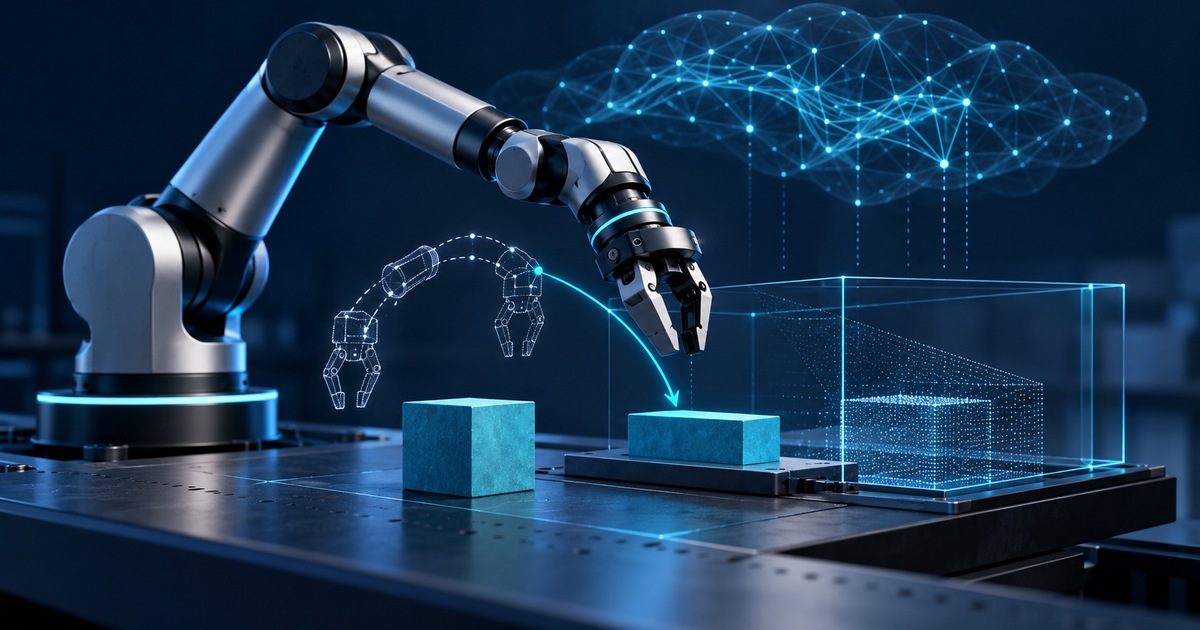
In our example, a laboratory robot moves a closed empty box between two clearly defined positions. We would first assess recognition on recorded material without moving hardware. In an authorized test environment, we would then check whether the system distinguishes a planned move, a move under way, and a completed move. This is our proposed method, rather than a Google demonstration or customer outcome.
We would include an obscured camera, a changed position, and a failed step. It would be useful to establish whether only the unfinished operation is repeated and whether confirmation comes from an appropriate observation. A generic statement that the task is done would be insufficient. Model decision time should also remain separate from movement time and subsequent verification, so an apparent improvement cannot hide unfinished physical work.
Access begins the assessment
The public preview makes a specific service more accessible, but it does not replace evaluation of the workcell. For a pilot, we would record the model version, the interface to the control system, and the stop conditions. That would help connect a failure to an actual input and stage, instead of explaining it only through a general intelligence score.
SIExpo has not conducted robotics tests or independently confirmed the company's performance figures. The development is a more accessible cloud route for high-level reasoning. Its practical usefulness will depend on selecting the exact supported API, reliable execution, and measurable confirmation that each authorized physical task has actually been completed.
*AI illustration: a conceptual editorial image, not a documentary photograph or an actual product screen.*
*Editorial verification: 2026-10-28T17:14:21.370659+00:00.*