NVIDIA announced on November 23 that Jensen Huang is returning to lead the company. The independent investigation continues. That distinction is essential: a leadership decision is not a final outcome of the investigation.
The news follows the November 12 announcement of his departure as president, chief executive and board member. Chief financial officer Colette Kress took on the interim executive leadership role at that point. The November 23 development is a new stage in the same story, rather than a repetition of the original transition.
Two decisions answer different questions
Bringing back a leader answers the question of who runs the company now. An investigation addresses a different question: which facts will be established and what action will follow from them. There is no logical reason to turn the first answer automatically into the second. Readers should therefore keep appointments, evidence and final findings separate.
Our editorial interpretation is that this boundary will determine the quality of subsequent coverage. A headline can accurately report the change at the top of NVIDIA without promising a resolution to every other issue. Doing otherwise would replace the new event with a conclusion that requires separate evidence.
What the oversight mechanism adds
On November 17, NVIDIA announced a standing board committee covering national security, export controls and international trade risks. This is an oversight mechanism, distinct from the investigation into the particular case. Creating a body and completing its work are also different events.
To assess such a structure, it is useful to watch for concrete follow-up actions: published rules, clearly assigned responsibilities and verifiable results. A committee's name alone does not measure its effectiveness. Equally, the absence of an immediate public report does not automatically establish that it is inactive. Either conclusion requires more than an assumption.
How to read the next development
A practical approach is to maintain a short timeline recording the date, source and exact action that occurred. An appointment notice, a promise of a future change and a published finding belong in separate entries. This prevents a newer headline from erasing qualifications in an earlier document or turning an expectation into an already implemented measure.
Who is speaking also matters. A board statement describes the company's position; an independently established fact requires its own basis. When another development appears, readers should check whether there is a new document, precisely what it establishes and whether it describes a completed process or an interim stage. This is an editorial standard, not a claim that a final finding has already been published.
Why this matters to the AI sector
For teams planning AI products and infrastructure, the useful question is which specific commitments have changed. Corporate news alone does not replace a contract, product documentation or a technical test. A deployment decision should rest on verifiable conditions for the relevant system, rather than a personal view of its leader.
The next signals to watch are official investigation findings and concrete decisions on governance and controls. Until they appear, a careful reading keeps the confirmed leadership development separate from questions that still require evidence. This article combines the news with editorial analysis; it does not offer a share-price forecast.
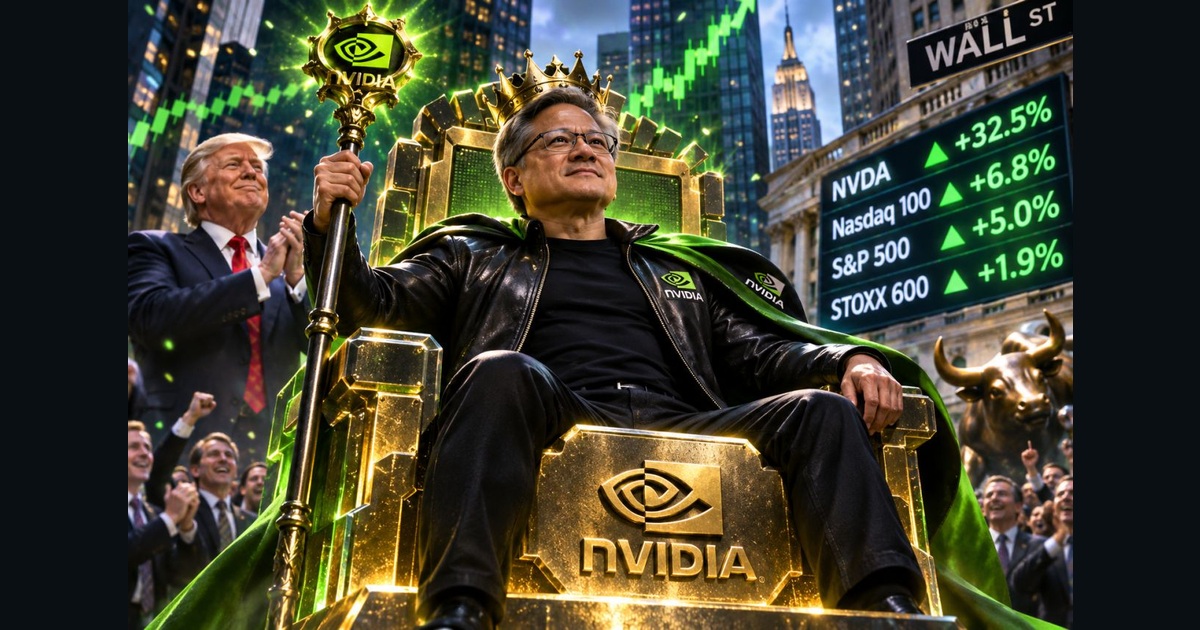
Cover: an artistic composite supplied by the user. The scene and market percentages belong to the illustration and are not documentary evidence.