Google announced an update to LiteRT in Google Play services on October 28, adding GPU inference through the CompiledModel API. The company reports roughly 1.4 times faster execution than the legacy GPU delegate and approximately 8 MB smaller applications in its own tests. The size reduction comes from sharing the runtime instead of bundling a separate copy inside each app. These are not SIExpo measurements or a promise of identical benefits for every model.
What is local and what is shared
Current documentation says input images, text, and video are processed on the device. The runtime can nevertheless contact servers for updates and compatibility information, and it sends diagnostic metrics. Local inference therefore does not mean the absence of all network communication. The documentation also separates cases needing devices without Google Play services, custom operations, or NPU acceleration today: it directs those cases toward standalone LiteRT.
Measuring the effect on an application
In our illustrative scenario, a mobile team uses image segmentation. We would compare two versions with the same model, inputs, and quality requirement. Beyond inference duration, we would record initial preparation, opening latency, and behavior after several consecutive operations. This is a proposed assessment, not a test conducted with the new LiteRT.
For someone with a weak connection, the first successful use may matter more than the fastest subsequent computation. We would therefore check whether the app explains its preparation state clearly and what it offers when a required component is not ready. The announcement does not establish that every device has identical capabilities or that every user should receive the same configuration.
Migration also requires output verification
Our interpretation is that a shared runtime changes delivery, not merely package size. In a pilot, we would preserve control inputs and define acceptable output differences. An acceleration that violates output requirements would not count as success. We would compare actual categories of devices instead of letting one convenient phone represent the entire audience.
An automated code migration should also pass review and compilation. Successfully edited dependencies do not establish correct results on a device. When something fails, knowing the exact combination of runtime version, model, and selected accelerator helps make the behavior reproducible.
The update is a practical step toward more widely shared infrastructure for local AI on Android. The announced size and speed benefits justify evaluation, while migration still depends on required devices, operations, and data flows. SIExpo has neither modified a mobile project nor performed comparative measurements.
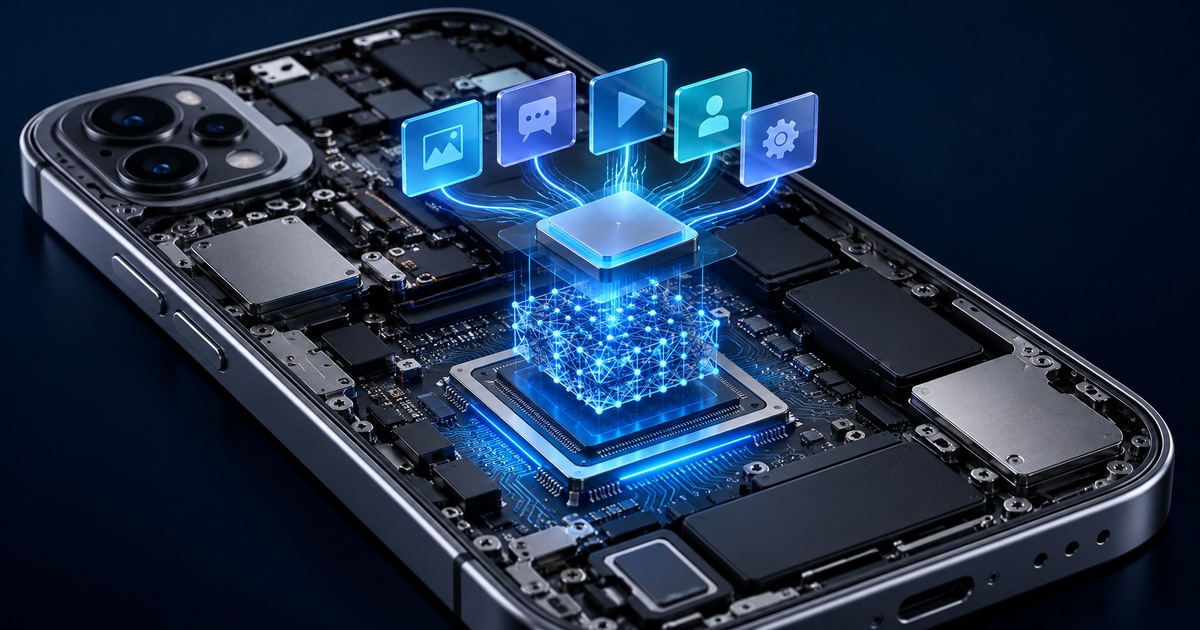
*AI illustration: a conceptual editorial image, not a documentary photograph or an actual product screen.*
*Editorial verification: 2026-10-29T07:14:17.195221+00:00.*