In an October 31 post on X, Elon Musk set a target of around 1.2 million Blackwells at Colossus 2 by the end of the year. This is his statement about future scale. SIExpo read the original post, but has not verified physical inventory or the commissioning of the facilities.
Separate configurations and deadlines
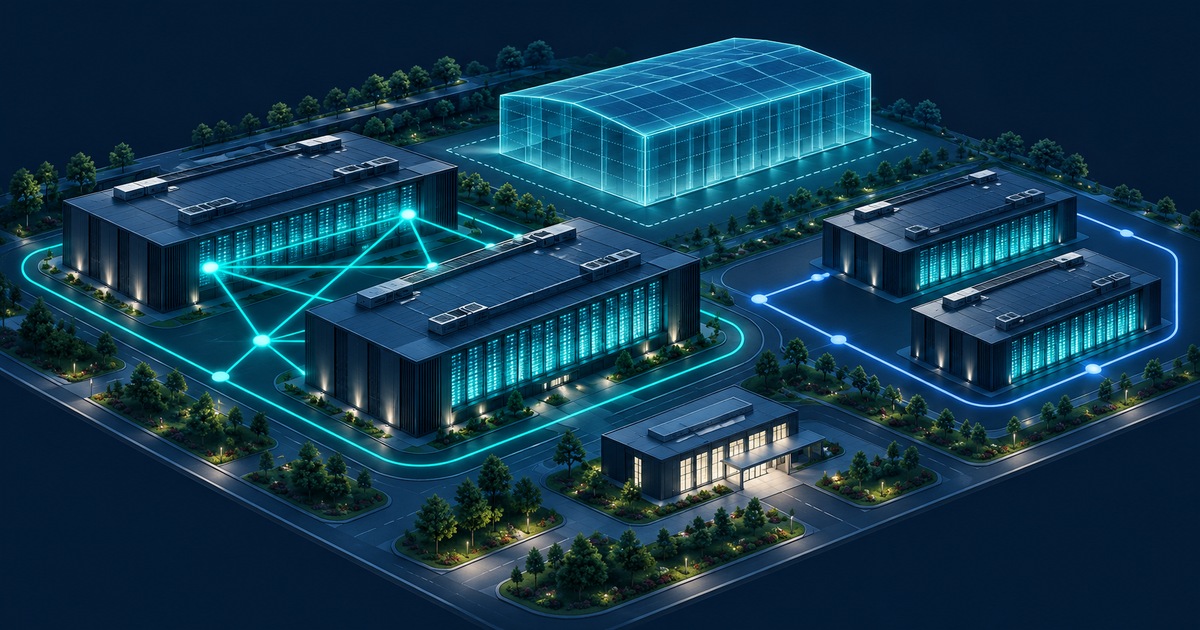
In another post that day, Musk described Macroharder and Minihard as each having 220,000 GB300s with 800 Gb/s network cards for training. He outlined the same configuration for Gun Range, targeting operation by late November. For Spam, he described roughly 200,000 GB300s for inference and a December schedule. Both the numbers and timing come from the post's author, not an independent account.
The posts do not constitute a complete technical inventory of the campus. We therefore do not add hypothetical machines to reconcile the overall total with the named buildings. Nor do we convert a future launch target into confirmation that the relevant cluster already serves workloads.
Why networking belongs in the story
NVIDIA's product page describes GB300 NVL72 as a rack-scale system containing 72 Blackwell Ultra GPUs and 36 Grace CPUs. It also specifies 800 Gb/s network connectivity per GPU through ConnectX-8. This provides platform context. It does not prove that every Colossus 2 building uses precisely that complete configuration or achieves identical performance.
The distinction between training and inference helps interpret the plan. Training changes a model's parameters; inference uses a trained model to handle particular requests. These are different workflows. Musk describes simpler cabling for the inference building. We do not turn that into a universal claim that serving models is cheap or has no substantial communication requirements.
Assessing the next milestone
Our editorial reading is that a stated GPU count captures only one aspect of scale. A useful report would distinguish delivered equipment, installed systems and capacity reliably running real workloads. Those are different states; the presence of hardware does not always translate into the same available service.
To compare clusters, we would look for a consistently described task, execution time and accounting for unsuccessful attempts and downtime. Without those conditions, an impressive count cannot independently establish how long a new model takes to train or how good its answers will be. These are proposed evaluation criteria, not unpublished Colossus 2 results.
This article covers an otherwise unreported-on-SIExpo announcement from the past three days because the separation of training and serving capacity has practical relevance. The next verifiable events are the proposed building launches and reports of their actual operation. For now, the evidence is Musk's public description. We are not announcing a new Grok model, a completed final configuration or an independent campus inspection.
Editorial verification: 2026-11-02T17:07:21.522703+00:00 (UTC; Europe/Sofia is UTC+02:00).