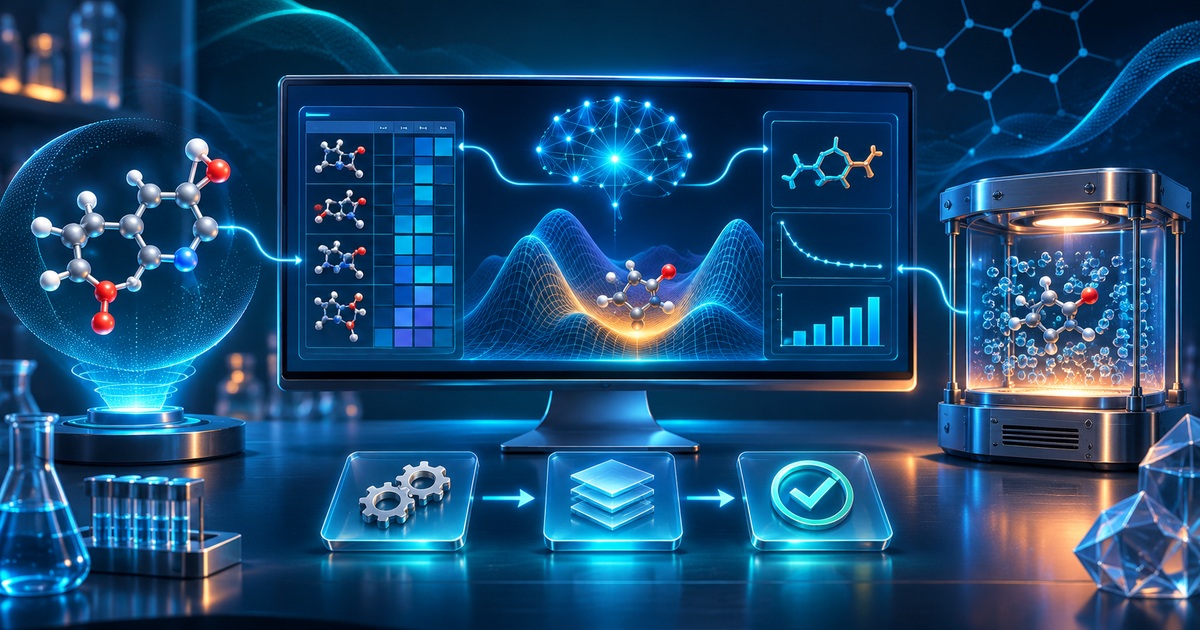
NVIDIA introduced Nemotron for Science on November 16, combining scientific applications of Nemotron 3.5 Super VL with data and post-training recipes for specialized agents. The new development is the scientific package and Litmus-Bench v0.2, rather than another launch of the previously announced base model.
The company emphasizes chemistry and the use of specialized computational tools. This is research infrastructure. Its announcement does not establish an effective treatment, an approved medicine or a generally autonomous laboratory.
What the available artifact contains
The Litmus-Bench v0.2 dataset card specifies 47,118 training questions and 2,056 test questions with short answers. It describes data provenance and use for chemistry reasoning and training with verifiable rewards. The public page and README are available; we did not download and execute the complete dataset.
Sources include ChEMBL, ExpansionRx and Biogen, while some tasks use RDKit descriptors. The card also lists different license identifiers. Calling a dataset open therefore does not remove the need to inspect the conditions and provenance applying to particular records.
NVIDIA connects the package with model post-training and scientific agents that call external tools. Reported application results remain claims by the company and its partners. We do not turn those statements into independently reproduced clinical or laboratory achievements.
Why the data boundary matters
Our editorial assessment is that releasing training and test tasks together creates both an opportunity and a responsibility. If a team trains on the questions later used to measure success, a high score may reflect memorization. The team needs a record of what entered training and what remained held out.
For a separate evaluation, we would reserve new molecules or tasks in advance and keep verifier versions fixed. This is a suggested control, not an experiment conducted by SIExpo. Correct numerical answers, correct tool use and persuasive verbal explanations should also be assessed separately.
For example, an agent might obtain the right value through an external calculator while explaining its chemical meaning incorrectly. The reverse is possible too: a sensible explanation accompanied by an incorrect calculation. Scientific use requires those failure modes to remain visible rather than disappear inside a single headline score.
The package is valuable as a more accessible foundation for verifiable workflows. A persuasive follow-up would specify the data, define success and independently check execution. Available models and datasets can make that work easier; they do not replace scientific evidence itself.