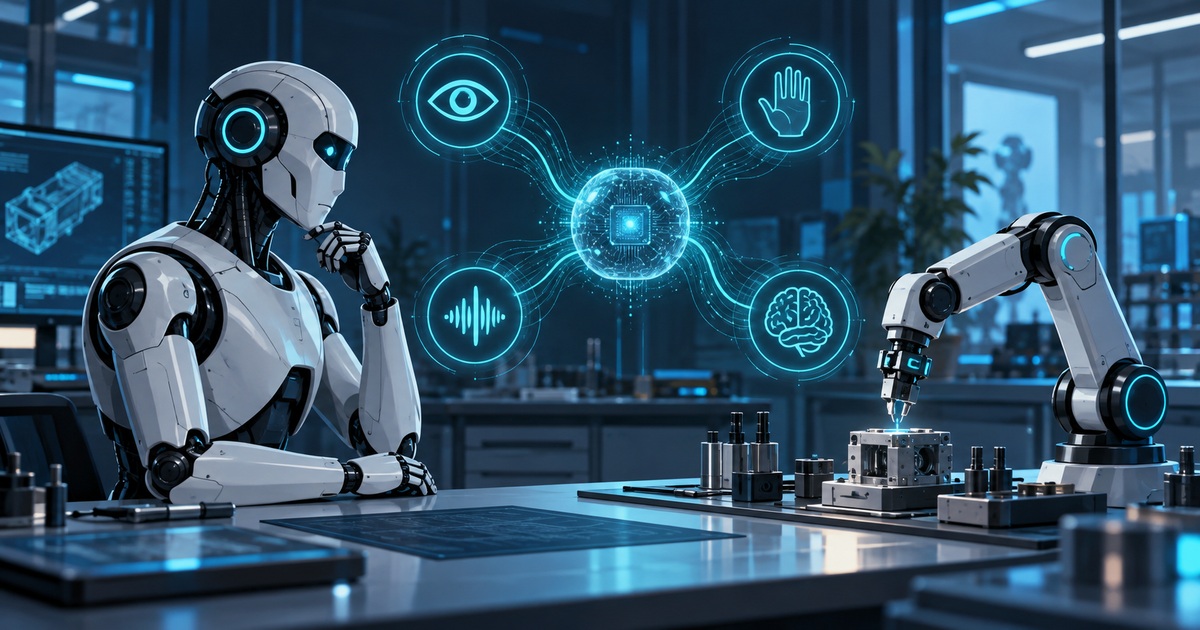
NEURA Robotics introduced Neuron AI in Metzingen on October 14, 2026. The company says the model combines 3D vision, touch, sound, robot state, language and memory. Training draws on robot data, simulation and human demonstrations, covering five robot embodiments. An eleven-minute laundry sequence is announced for GTC Berlin on October 20–22. This is a forthcoming demonstration, rather than an independently verified production result.
From an image to a physical action
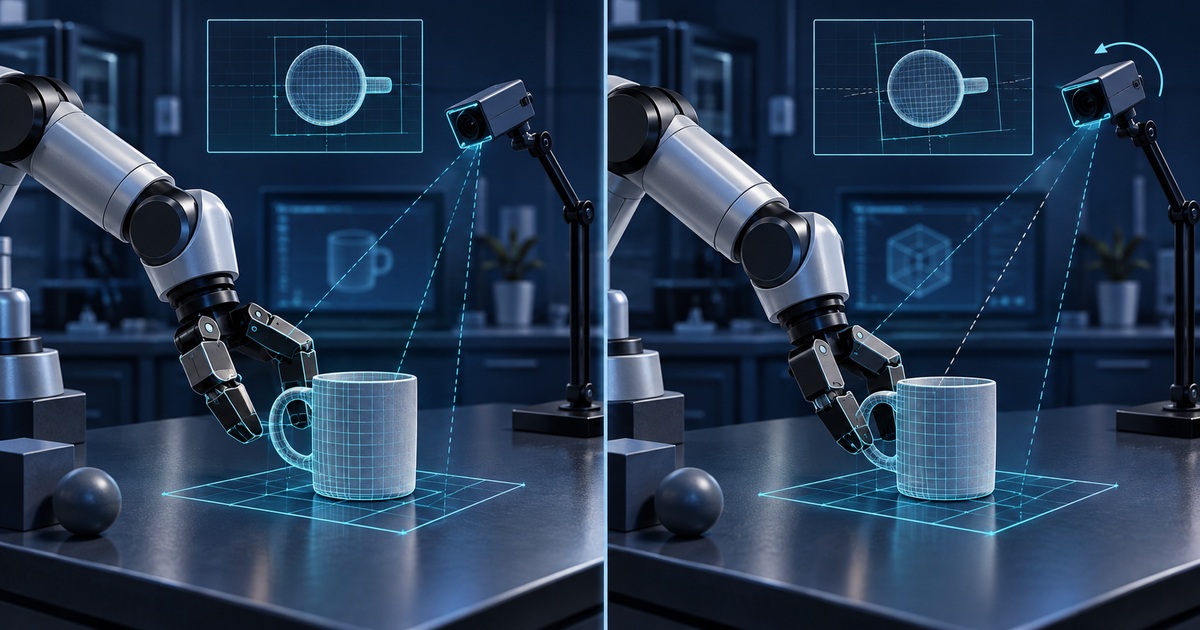
In our editorial interpretation, the important question is how different signals can check one another. A machine seeing an object does not necessarily know whether it holds it securely. An additional contact measurement could change the decision about the next movement. This is an explanatory example, not a Neuron AI task our newsroom observed.
Memory should also be evaluated through behavior. We would test whether a robot can continue after an object is temporarily obscured, distinguish an old observation from a new one and stop when signals conflict. An attractive model visualization does not answer those questions. Repeatable trials need clearly described conditions and human control over the permitted boundaries of action.
The platform is a separate layer
The Neuraverse page describes a shared platform for orchestration, digital twins and applications. NEURA presents its Gyms as facilities for physical training and validation. This is context from the same supplier, not an independent assessment of the new model.
Our analysis is that transferring a skill between robots is also a version-management problem. A team should know which model, data and configuration were used. Changing a camera, hand or working surface may require another check. A shared platform has practical value when it preserves that trail and permits a return to a validated version if something goes wrong.
A robot is more than its software
The official 4NE1 product page lists sensor coverage, multimodal AI and remote operation, alongside configurations for different environments. These are manufacturer descriptions. They do not automatically establish autonomy for every task or authorize a machine to operate without an assessment of the particular workplace.
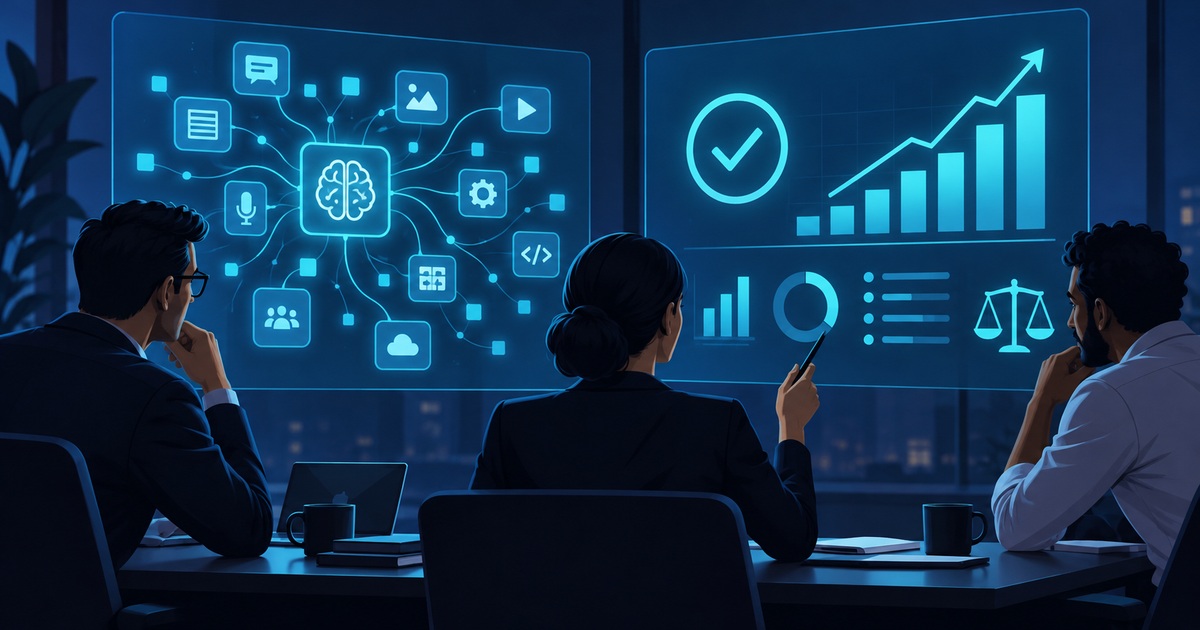
For a business, a useful first trial would be a bounded process with known materials and a defined safe area. We would record completed tasks, operator interventions and reasons for stopping. Time spent learning and time spent working reliably should be separated. If an employee prepares each subsequent step, that assistance belongs in the description of the result.
What remains to be demonstrated
We do not treat a company announcement as a general solution to robotics. Task diversity, repeatability, behavior after a sensor failure and recovery from mistakes will matter. The announced demonstration may provide a useful example, but it cannot by itself measure operation over an entire shift.
The news illustrates a European direction for Physical AI: considering the model together with its senses, machine and deployment process. Our conclusion is that progress will be judged by verifiable actions and explicit limitations. The next observation should compare today's announcement with what is actually shown in Berlin, without turning future promises into present facts.
Sources: NEURA Robotics — Neuron AI, NEURA — Neuraverse ecosystem, NEURA — 4NE1 product context.
Editorial verification: 2026-10-14T16:34:39.030582+00:00 (UTC).