OpenAI employee Abdulrahman Alfozan has been charged with unlawfully intercepting or attempting to intercept oral communications. Guilt remains to be determined.
The chronology according to DOJ
- Around September 28: alleged installation of the device.
- September 30: discovery by personnel.
- October 5: footage of a conference-room visit and discovery of a second device in an unattended bag.
- October 9: arrest.
- October 13: public announcement and initial appearance in federal court.
These dates distinguish separate events. Discovery, an internal inquiry, arrest and public disclosure are not a single action. The story should therefore not describe a device being found on the announcement date. The sequence also does not replace a judicial examination of the evidence.
What OpenAI says
In its verified OpenAI Newsroom post, the company says its models helped it understand the device and its origin and identify an employee. It reports termination and cooperation with the FBI. At the time of its statement, it said there were no indications of improper access to or exfiltration of model weights, source code or customer data.
This is a company assessment bounded by time. We do not convert it into independent confirmation that no information of any kind was affected. A conversation, a file and a customer record are different types of information; an assessment about one does not automatically answer questions about the others. That distinction matters when a short headline must summarize a complicated incident.
AP notes that the complaint does not explain what the accused might have intended to do with any captured conversations. An ultimate purpose or outside sponsor should therefore not be presented as established. The same caution applies to the amount and contents of any recordings, which our newsroom has not independently verified.
The important boundary around AI's role
Physically finding an object, analyzing technical information and establishing responsibility are separate tasks. The company describes assistance with analysis. Its statement does not demonstrate that a model independently spotted the object in the room or conducted the investigation without people.
Our editorial interpretation is that AI's usefulness here should be evaluated through verifiable steps. What information did the system receive, which conclusions were checked, and who made the final decision? The public description does not let us measure the model's independent contribution. We therefore do not portray the case as a demonstration of a universal AI detective.
What the images show
The DOJ announcement includes device images and a surveillance frame. We compared the two images supplied to us with the published exhibits. We retain them as documentary material published by DOJ, not AI illustrations. An image of the accused is not, by itself, proof of guilt.
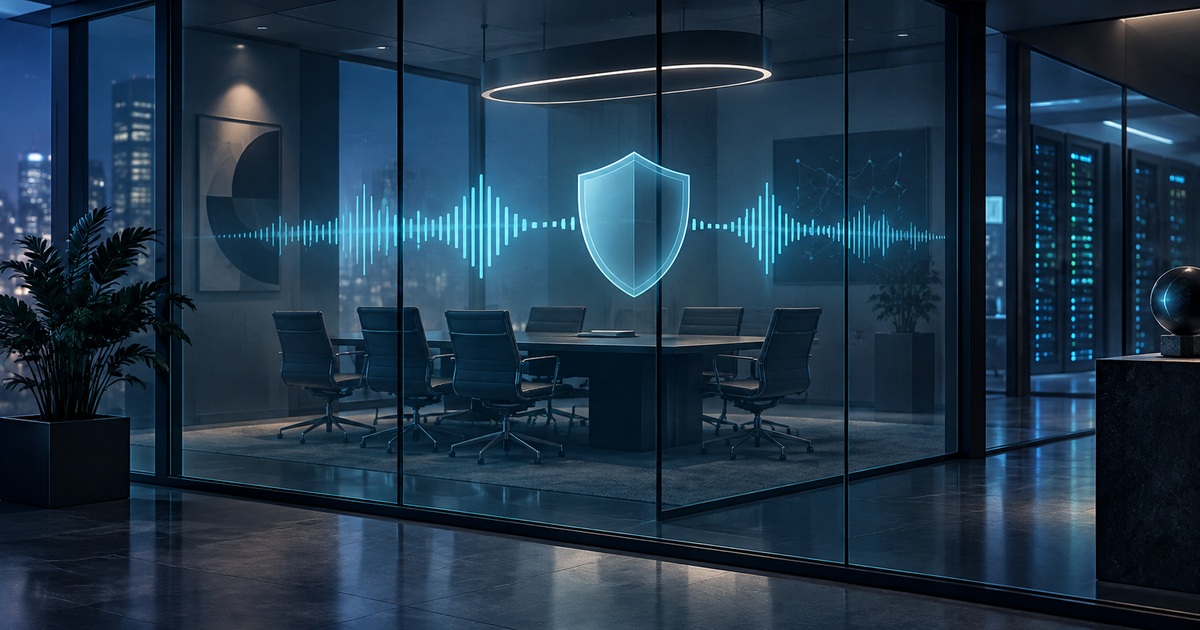
This article's cover is a separate AI editorial illustration about protecting confidential conversations. It does not reconstruct the actual room, device or individual. Separating documents from illustration helps readers understand what constitutes source material and what is an editorial visual choice.
Why this matters to the AI sector
In our analysis, protecting a laboratory includes the places where decisions are made. Even a well-protected digital system does not fully answer questions about access to rooms, meetings and confidential discussions. This is a general risk-management observation, not a finding about OpenAI's nonpublic systems.
A useful direction for organizations is a traceable process: who receives a report, how evidence is preserved, who checks the results, and how uncertainty is communicated. An AI assistant can form part of such a process, but responsibility for verification remains with people. Controls should also consider personal privacy rather than treating every unusual employee action as evidence of wrongdoing.
What we will follow next
Subsequent court documents may change the understanding of the case. We will distinguish new evidence from repeated company statements and correct this article if the purpose, affected information or participants' roles become clearer. The central question remains what can actually be demonstrated, rather than how convincingly a particular account is expressed.
Sources: DOJ — official announcement, OpenAI Newsroom — verified statement, AP — independent reporting.
Documentary exhibits: device images published by DOJ, surveillance frame published by DOJ.
Editorial verification: 2026-10-14T14:51:59.845945+00:00 (UTC).