Tether AI Research announced QVAC BotPsy on November 11: a 0.8-billion-parameter model for tool calling and relatively simple agent tasks. Its weights are available, and it is derived from Qwen3.5-0.8B. The central direction is local execution on hardware controlled by the user, rather than necessarily sending every request to a cloud model.
This is a developer model, not a newly released complete mobile application. To manage a calendar, files or another function, it must be integrated into software that supplies tools, validates their parameters and actually carries out operations.
What is available
The official model card lists BF16 weights in safetensors and separate GGUF variants for llama.cpp and the QVAC SDK. The license is Apache 2.0. English is the recommended language; the published language evaluations do not establish Bulgarian quality.
Model size matters to the accessibility of local inference, but is not a standalone specification for memory, speed or battery consumption on every phone. The device, quantization and context length affect these properties. SIExpo has not tested BotPsy on consumer hardware.
What the company evaluations show
Tether's technical publication compares BotPsy with four other models using a shared evaluation harness. The authors report the highest score in five of six agent comparisons against the included Qwen3.5-2B-Think. The larger model remains ahead on Claw-Eval. Headlines about beating larger models must therefore be read within this particular comparison group and exception.
In the separate BFCL v4 multi-turn section, the published figures give BotPsy 46.1 against 23.8 for Qwen3.5-2B-Think. This is a tool-use benchmark score, not the reliability percentage of every real operation on a phone. Improvement over a small base model also does not establish parity with every cloud model in general knowledge.
Local inference has boundaries
QVAC clarifies that computation itself can work without internet access, while an external tool, such as search or a booking service, may need a connection. A local model therefore does not automatically make the entire application offline.
More significantly, the official card restricts intended use: the work supports research and education and is not intended for safety-critical automated decisions or applications involving money, personal information, health or other sensitive topics. Illustrative assistant use cases do not remove that usage limitation.
Why the model remains interesting
Editorial analysis: a specialized small model may be useful when a task is clear and its function set is narrow. In such a project, tool descriptions are part of the product's quality. Two similarly named functions with different consequences can cause a problem that an aggregate benchmark table does not reveal.
A suitable initial experiment would use fictional data and reversible actions, such as preparing a proposed reminder. It should test missing dates, ambiguous names and failed tools. These are editorial evaluation suggestions rather than claims that Tether demonstrated every scenario.
A function call proposes an operation; the application decides whether that operation is permitted. Separating reading, preparation and execution makes the result easier to inspect. BotPsy provides another accessible basis for such experiments, while leaving application constraints and error measurement necessary.
Sources: Tether: BotPsy release announcement, Tether AI Research: BotPsy technical evaluations, BotPsy 0.8B official model card, QVAC: Local inference and intended use.
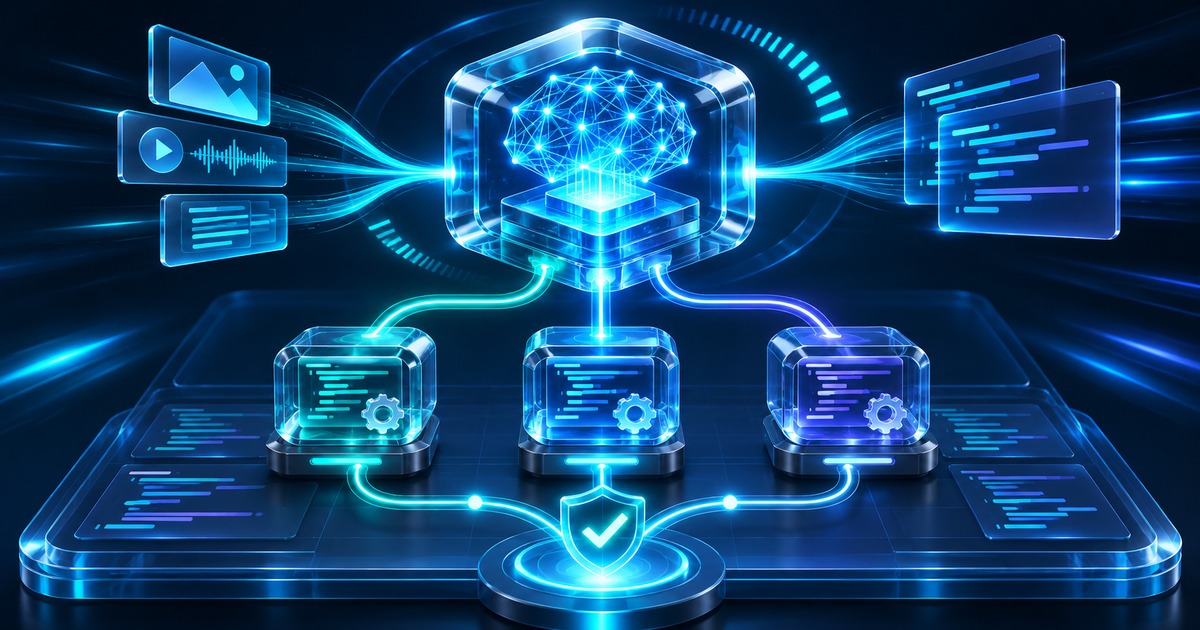
The cover is a conceptual AI illustration, not a documentary photograph.
Editorial verification: 2026-11-13T17:42:40.897636+00:00.