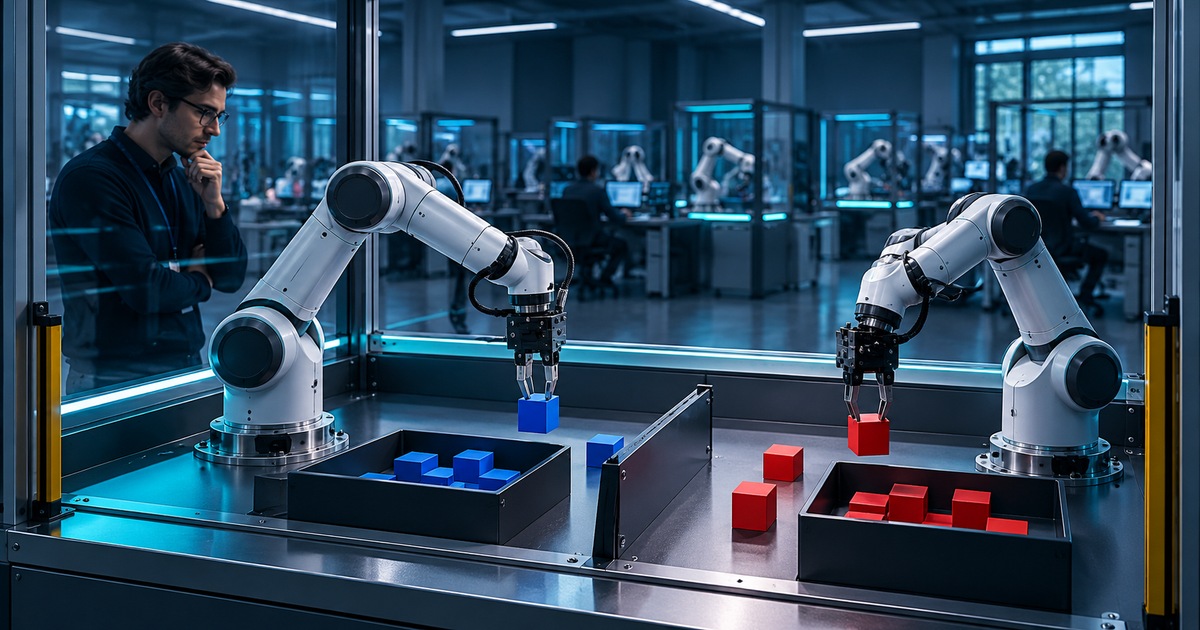
TUM and NEURA Robotics opened RoboGym at LabCampus near Munich Airport, the partners announced on 22 October 2026. The university describes 48 training cells and approximately 100 robots. The center is intended to collect data from physical interactions and develop robotic skills. This is an opened research facility, not evidence that every trained task is ready for industrial deployment.
Physical experience needs its own infrastructure
A language model can describe how an object is assembled. A robot also needs observations of what happens during contact, movement and changes in position. Describing a procedure and reliably executing it in the physical world are different achievements. That distinction explains the value of a controlled environment where researchers and companies can investigate practical capabilities.
NEURA describes combining real robot data, human demonstrations and simulation. The company says partners have practiced workflows since September. The October opening therefore does not necessarily mark the first working day of every activity. A proposed future international network remains a plan, rather than a completed set of equivalent operating centers.
Transfer must be tested beyond a familiar training cell
A useful engineering question is how skill transfer will be established. A robot may learn a movement involving one box in a precisely specified position. Its usefulness in a warehouse depends on what happens with other sizes, materials and arrangements. Repeating a familiar configuration many times is not the same as testing unfamiliar conditions.
Our proposed evaluation would keep training and assessment situations separate. During assessment, we would record completed operations, interruptions and human intervention rather than retaining only the most successful video. Conditions could then be varied one at a time. This is an editorial evaluation proposal: SIExpo has not visited RoboGym or performed such an experiment there.
Recorded movements need interpretable context
TUM says collected data are organized in a cloud resource for research and training. This describes the infrastructure, but does not imply unrestricted public downloads of every industrial demonstration. External researchers and companies participate through requests and specific collaborations.
A prospective partner would need to ask who may use the data, how collection conditions are recorded and which company restrictions apply. Two motion sequences may look similar while using different units, sensors or definitions of success. Without that information, a large archive is not necessarily a ready-to-use foundation for reliable transfer between machines.
The same distinction matters when a simulation is added. A plausible virtual motion can help explore a task, but real contact and sensing still need evaluation. A useful record should make clear which observations came from hardware and which were generated in simulation. This is a general engineering criterion, not a limitation we have independently measured in the new facility.
The verified development is a shared place for academic and industrial work on physical skills. Claims about faster learning and broader applications should be judged through specific tasks and repeatable outcomes. RoboGym creates infrastructure in which those assessments can be carried out; the opening itself does not replace the evidence needed to accept a robot for a particular operational role.
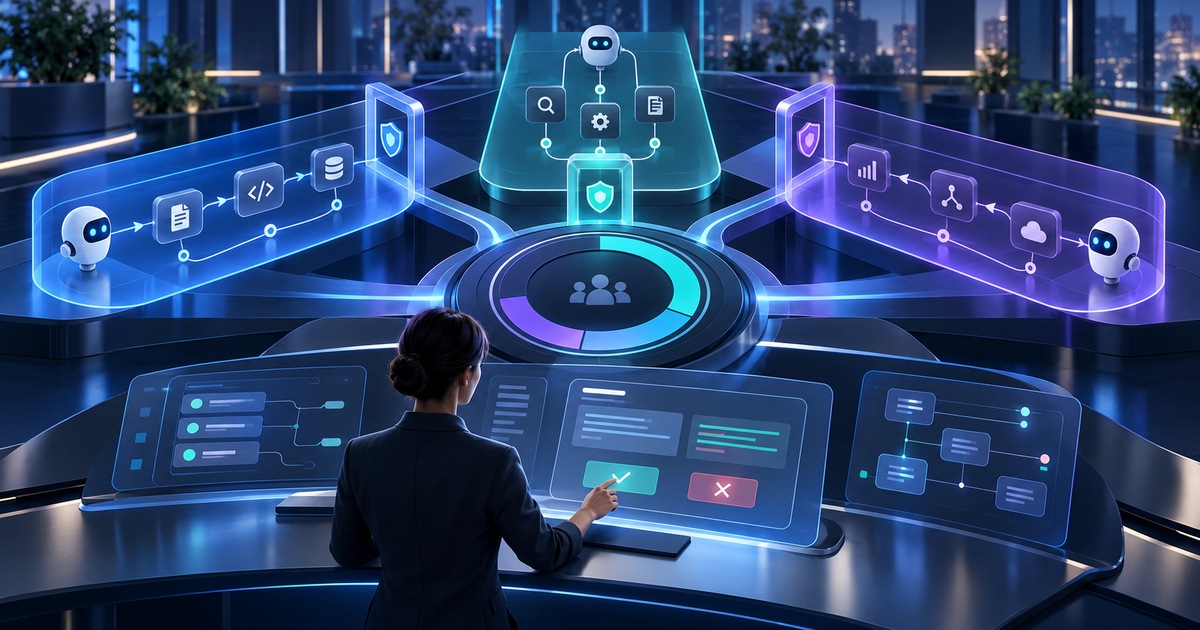
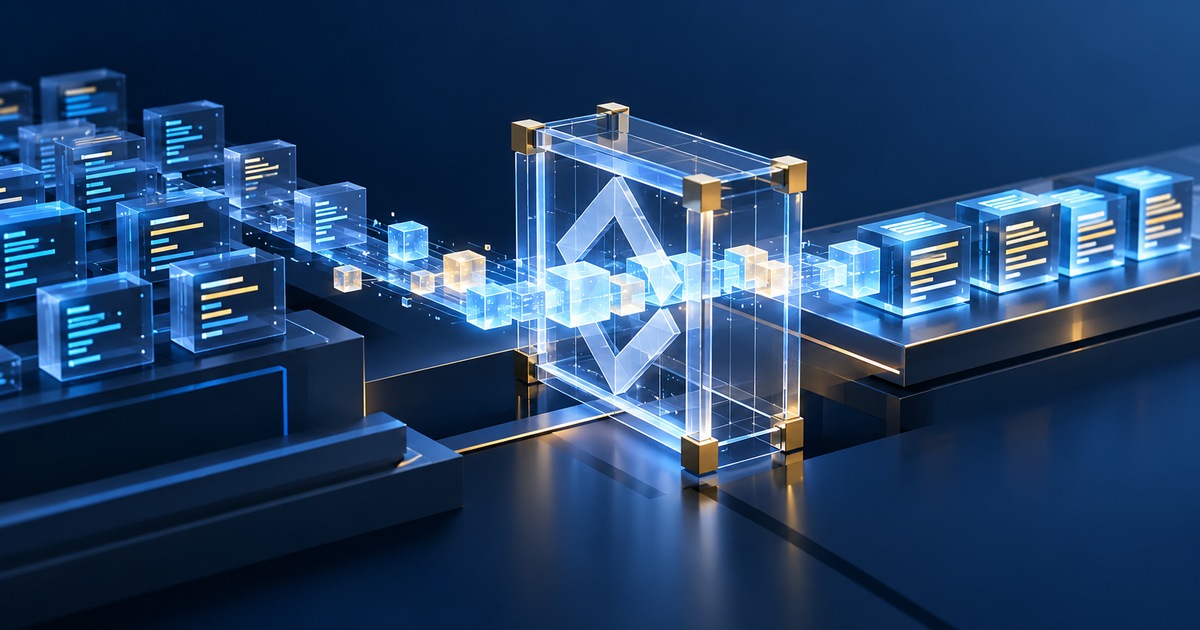
*AI illustration: a conceptual editorial image, not a documentary photograph or an actual product screen.*
*Editorial verification: 2026-10-26T09:35:38.064383+00:00.*