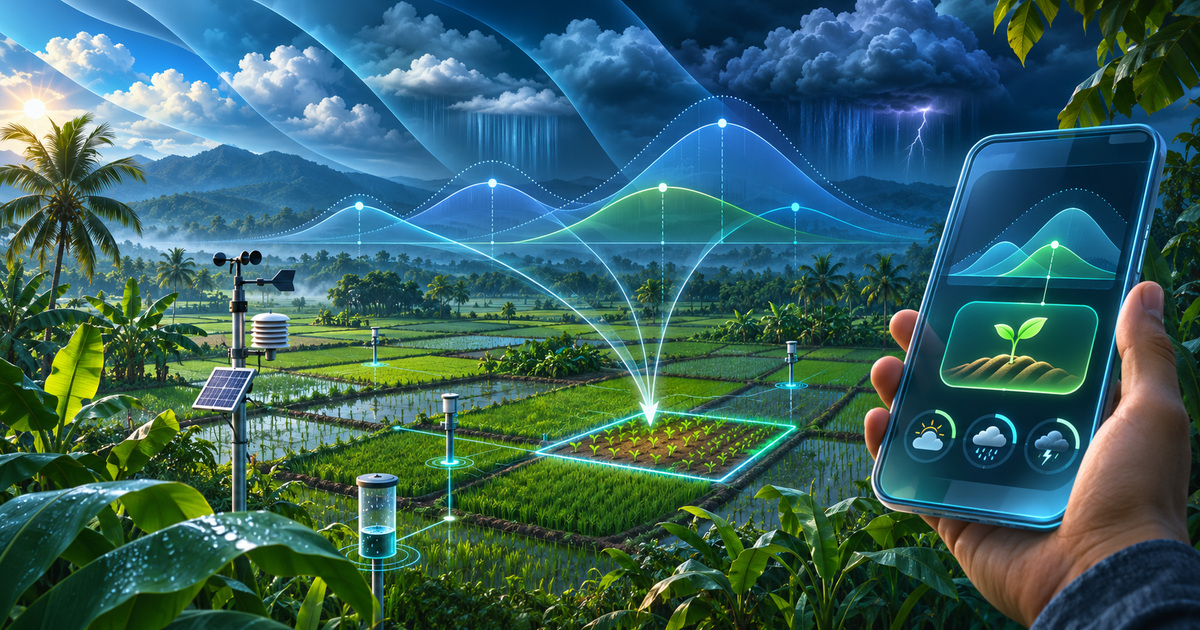
On November 5, 2026, the University of Chicago announced a $10 million Laude Institute grant for AI weather forecasting. The recipient is the team behind the planned UChicago–Laude AI Almanac. This is a funding and platform-development announcement; it does not establish that a finished product is deployed everywhere or that future accuracy is proven.
What the team plans to build
The project page describes a free, open-source platform for meteorological agencies, governments and NGOs. Its approach combines AI and physics-based forecasts with local historical records, evaluating them against specific decisions, including rainy-season onset. The leads are Rebecca Willett, Pedram Hassanzadeh, Ian Foster and Michael Kremer. The stated aim is adaptation for regions with limited observations and computing resources.
Laude's separate announcement confirms Chicago's selection among four multi-year laboratories receiving $10 million each. The institute expects open software and evidence of real-world impact over the coming years. That corroborates the funding framework, but is not an independent test of forecast quality.
Average accuracy is not the entire task
Our editorial interpretation is that usefulness starts with the decision to be made. Suppose a farmer is choosing between two planting dates. Risk around those particular days and location matters, rather than only a model's average error across a vast region. This is an illustrative example, not a claim of measured income or yield gains from Almanac.
An evaluation could compare the decision made with the new tool against one based on customary local information. Define the period, region and verification method beforehand. If criteria are chosen only after the outcome is known, an impressive individual example can conceal failures elsewhere.
Uncertainty is also part of the product. Users need to understand whether they are receiving a most-likely value, a range or the probability of an event. Without that distinction, a message can sound like a promise even when the model works with uncertain conditions. These are our evaluation criteria, not a published interface specification for the future platform.
From software to a functioning local service
Open code could facilitate scrutiny and adaptation, but does not itself settle who maintains local data, monitors failures and explains warnings. A pilot needs an accountable operator and a correction procedure when input records prove incomplete. Otherwise, a good model can reach users through an unreliable process.
The next verifiable milestones are accessible software, a documented method and results for particular places and decisions. The grant funds that work; it does not replace it. SIExpo has not independently tested Almanac forecasts and does not credit the new funding with agricultural or health outcomes already achieved.
Editorial verification: 2026-11-08T17:56:23.508205+00:00.