CarryOn proposes two connected loops around a robot-control model: planning for the person and scene, and supervising physical execution. The preprint by Zixuan Wang and colleagues was submitted on October 15, 2026. The underlying VLA policy remains frozen. We cover this early research as a valuable previously uncovered contribution, not as today’s launch of a consumer robot.
What an assistant needs to remember
The official project page illustrates food serving: a retained preference and a new observation can change the plan. It distinguishes persistent user context from scene information that may become stale. These should not be merged. If an object has moved, an old location record is insufficient evidence for the next action, even if that information was correct during a previous interaction.
The practical distinction can be explained without a robot. An assistant knowing a person’s preference does not yet know whether the required object is available now. Conversely, finding an object does not make it appropriate for that person. This is our explanation of the separation, not an additional CarryOn result or evidence of reliable operation in every home.
Protection before contact and repair after failure
The authors report violations falling from 52.6% to 6.1% in a particular test with an already safety-finetuned VLA. The execution loop filters actions against predicted geometric contact. That is reported behavior under specified obstacles and conditions, not proof of protection against every physical hazard. SIExpo has not reproduced the experiments or evaluated a robot running the system.
The project page also qualifies another widely repeated number. The rise from 13% to 80% concerns cumulative completion over 200 episodes with reused, refined recovery skills. It is not a universal probability that an arbitrary household robot will recover from a failure. The real-robot demonstrations also identify their playback accelerations, which matter when interpreting how long actions took.
Why the distinction matters
Our editorial interpretation is that preventing an incorrect movement and recovering from a failed manipulation deserve separate assessments. If a robot avoids an obstacle but leaves the task unfinished, protection may have worked without useful completion. If it finishes after many attempts, timing and interventions still need to be counted. One headline score struggles to capture all of those outcomes or explain the trade-offs.
For a future evaluation, we would want predefined conditions for stopping, success, and human intervention. Keeping attempt histories and skill versions would help establish whether improvement came from an actual revision or from a change in difficulty. Those are proposed evaluation criteria, not a certification assessment of CarryOn, and they should not be read as a claim that the researchers omitted such records.
CarryOn explores an architecture in which memory can be revised and execution can be supervised and repaired. Stronger conclusions about real use require broader testing and independent reproducibility. For now, the useful contribution is the clearly separated architecture and sufficiently specific descriptions of the experiments to let readers interpret the reported figures with their limits. A promising result in that setting remains a step toward dependable assistance rather than proof that the general problem has been solved.
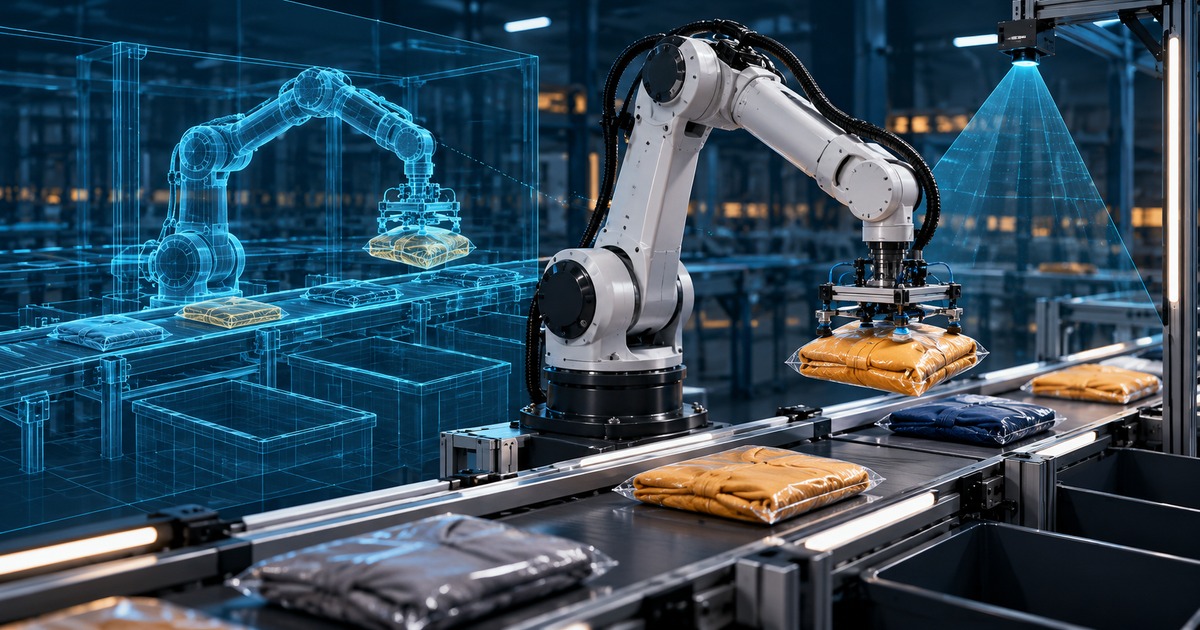
Editorial verification: 2026-10-18T16:11:34.881843+00:00 (UTC). Cover: conceptual AI illustration, not a documentary photograph.