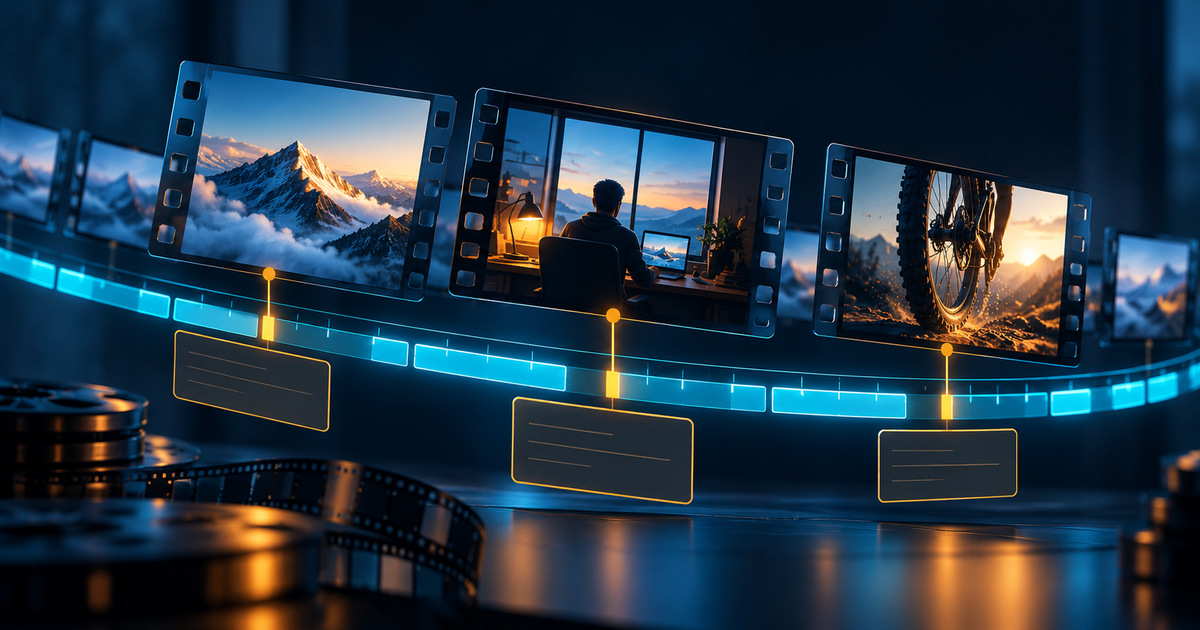
On October 19, 2026, Dream Labs announced $90 million in seed funding led by B Capital alongside Kindred Ventures, and the launch of Dream API. The company release, distributed through Business Wire, also introduces a fine-tuning service and a browser-based Robot Playground. Funding and product access are separate questions from the reliability a particular robot will achieve on a particular task.
Dream-1’s technical account describes a World Action Model jointly predicting video and actions. Baseline transfer targets bimanual robots with parallel grippers. End-effector commands are translated into movements by the robot’s kinematics solver. The company explicitly labels the model a research beta that has not been validated for safety-critical use.
A shared skill and a particular body
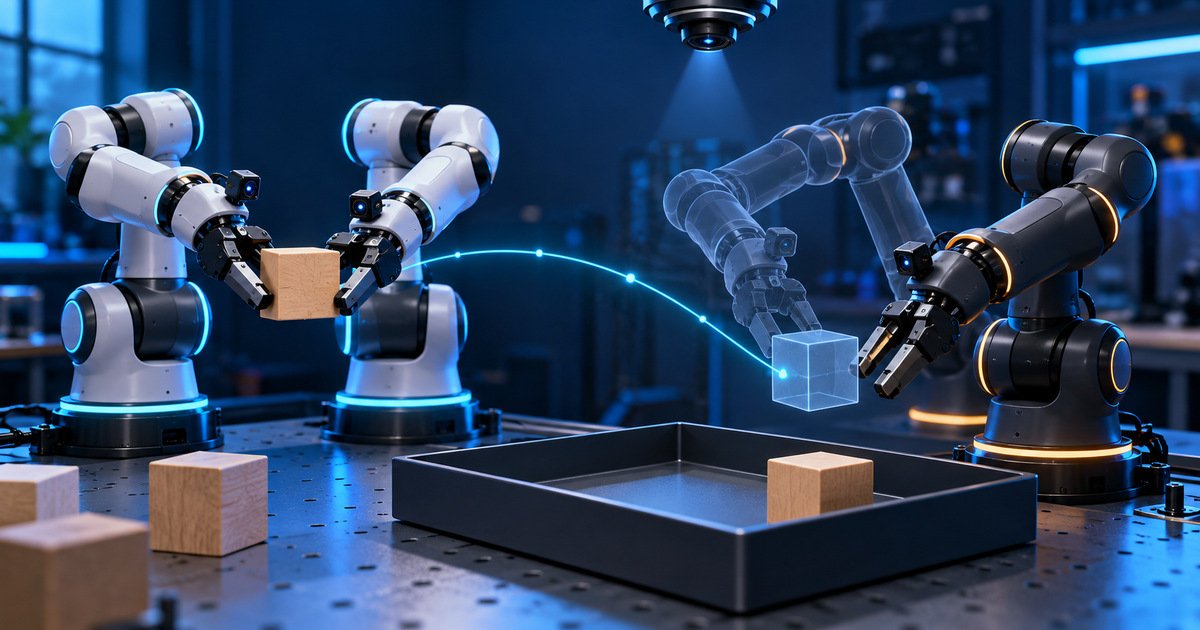
Our explanation is that a task such as putting a cube in a box can remain unchanged when the arms change. Reaching the cube and moving around surrounding objects still have to be realized by the actual machine. The distinction between describing a desired action and executing a feasible movement is central to evaluating this kind of service.
One successful attempt with an unfamiliar body is insufficient for that evaluation. We recommend a series with predefined objects, starting positions and a completion criterion. Results should separate unassisted completion, operator intervention and aborted attempts. Repeating a trial until it works should not be reported as an uninterrupted first-attempt success.
The company website offers a process for submitting demonstrations for fine-tuning and receiving an identifier for the adapted model. That provides a reason to separate results before and after adaptation in a comparison. The existence of the service does not establish how many demonstrations will be sufficient for someone else’s hardware.
A useful first trial
Our proposed starting point is a simple task on a bounded workbench with the exact configuration recorded. Only one condition would then change, such as the box position. This is an evaluation method, not an experiment performed by SIExpo. It would help distinguish transfer of the intended task from dependence on a familiar arrangement.
Setup time, collection of demonstrations and human involvement in recovery should be recorded separately. Those costs are absent from a short demonstration video, yet they affect practical value for a small laboratory or developer. A useful trial protocol would make them visible rather than reporting only the moment when the object reaches its destination.
The before-and-after comparison should retain the same completion criterion. If an adapted run uses a simpler placement or more operator assistance, its improvement would be difficult to interpret. Keeping the conditions explicit would let a team judge whether collecting more data was worth the effort, without assuming a result in advance.
Dream-1 is worth attention because it offers access to a robot model as a service. Establishing usefulness starts with reproducible outcomes on named hardware. Its beta status and bounded baseline scope remain material to the story, regardless of the funding amount. The announcement creates an opportunity to evaluate that proposition; it does not settle the evaluation.
Editorial verification: 2026-10-20T06:10:23.482994+00:00 (UTC). Cover: conceptual AI illustration, not a documentary photograph.