Maverick 1.1 adds corrections, pointing context and work across rooms to a local Unity agent. The October 23 publication comes from Eren Ata at XRLab, Manisa Celal Bayar University. The project concerns controlling a virtual scene through tools, rather than universally controlling physical equipment.
An important qualification appears in the author's own evidence: performance on 669 deliberately unfamiliar cases was 41.6%. The model can select a plausible action when it ought to ask a question. Its new abilities should therefore not be interpreted as guaranteed safety or general reliability.
What must the application provide?
The repository distinguishes the Unity package from separately downloaded model files and llama.cpp. Package version 1.1.0 adds a new schema that must be selected; the default setting retains the older format. Input consists of scene descriptions supplied by Unity, rather than the model independently observing camera images.
Integration quality is consequently part of the resulting behaviour. If an application supplies an outdated position or the wrong object, a fluent language request cannot automatically repair that input. Our editorial recommendation is to check the identifiers and states actually reaching the agent before assessing the sophistication of its replies.
The package documents Windows x64 and Unity 2022.3 LTS as its starting environment. The stated model-server resource requirement is additional to the scene's own needs. We would not extrapolate a successful laptop demonstration to a standalone XR headset or another operating system without separate evaluation.
Reversibility is a contract with the application
For us, the most useful question about an undo function is exactly what it restores. Moving a virtual lamp may be reversible if its previous position and dependent states were retained. Sending a signal to another system is a different case. Sharing a command name does not make those consequences equivalent.
In an owned pilot, we would record the selected object, changed state and tool result before and after each action. Following an undo request, we would inspect the restored scene instead of accepting a textual confirmation as sufficient. This is a proposed check, not a test SIExpo performed on Maverick.
We would also include an ambiguous correction: two similar objects, followed by rejection of the first selection. Asking a question might be the correct outcome, rather than immediately moving the second object. Such a case tests whether the surrounding application supports safe waiting instead of rewarding every action as progress.
For a failed action, the record should retain both the requested change and the actual outcome. An interface that erases an unsuccessful attempt from its history could make a later correction difficult to interpret. The acceptance criterion should therefore concern the resulting state and the clarity of the recovery path, rather than the confidence of the explanation.
A local model still needs explicit permissions
When one person speaks while another occupies the scene, we would require a clear rule about whose actions may be changed. Identifying the speaker should not itself count as authorisation. The application surrounding the model must enforce rights and restrictions regardless of how persuasively the model explains its intention.
The practical development is an accessible project with specific integration conditions and published weaknesses. It may be useful for bounded virtual scenarios if teams verify actual changes and retain a refusal path. Bulgarian interfaces need separate language evaluation: the documented project is English-language, and local execution does not establish support for every language.
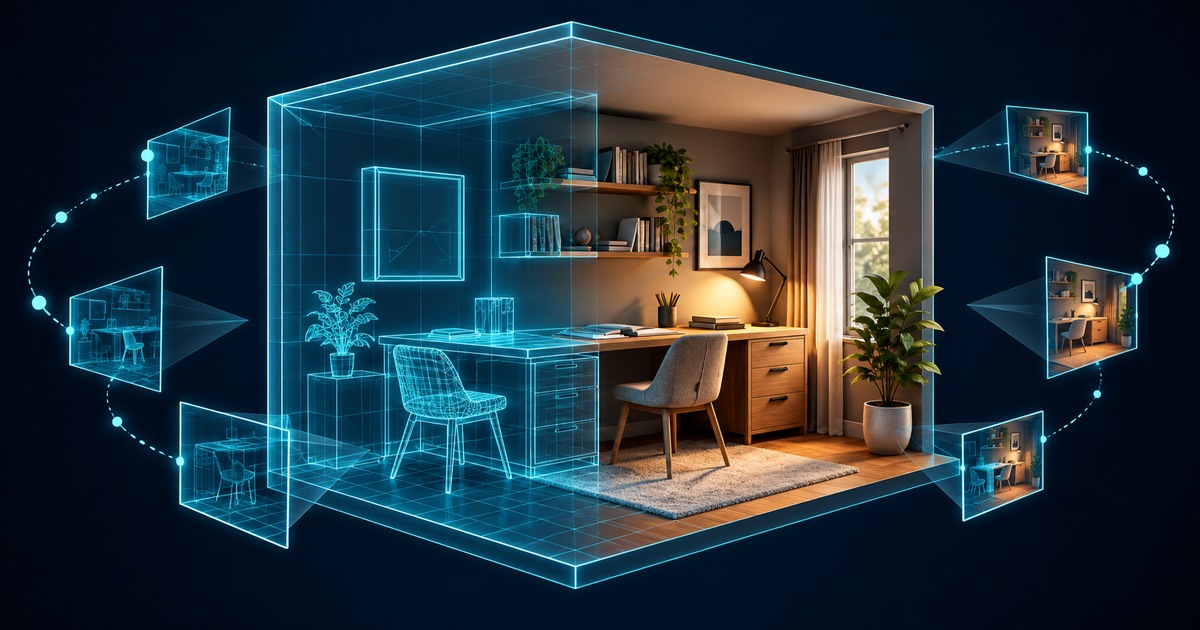
*Cover: conceptual AI illustration, not a documentary photograph.*
*Sources checked: 2026-10-24T06:09:06.891206+00:00.*