On November 2, 2026, onsemi announced an agreement to acquire Ferric, a developer of integrated voltage regulators. The terms call for $600 million in cash at closing and up to another $175 million if specified revenue milestones are reached. In its quarterly filing with the US Securities and Exchange Commission, onsemi confirmed that it had entered into a definitive agreement. The company expects the transaction to close by the end of 2026, subject to customary conditions.
What moves closer to the processor
An accelerator requires power at a voltage and current suited to different parts of the chip. When the workload changes, current demand can change abruptly. A regulator converts the supply and helps maintain voltage within the permitted range. At high currents, the path between the regulator and its load matters. Resistance along that path causes voltage drop and dissipates energy as heat.
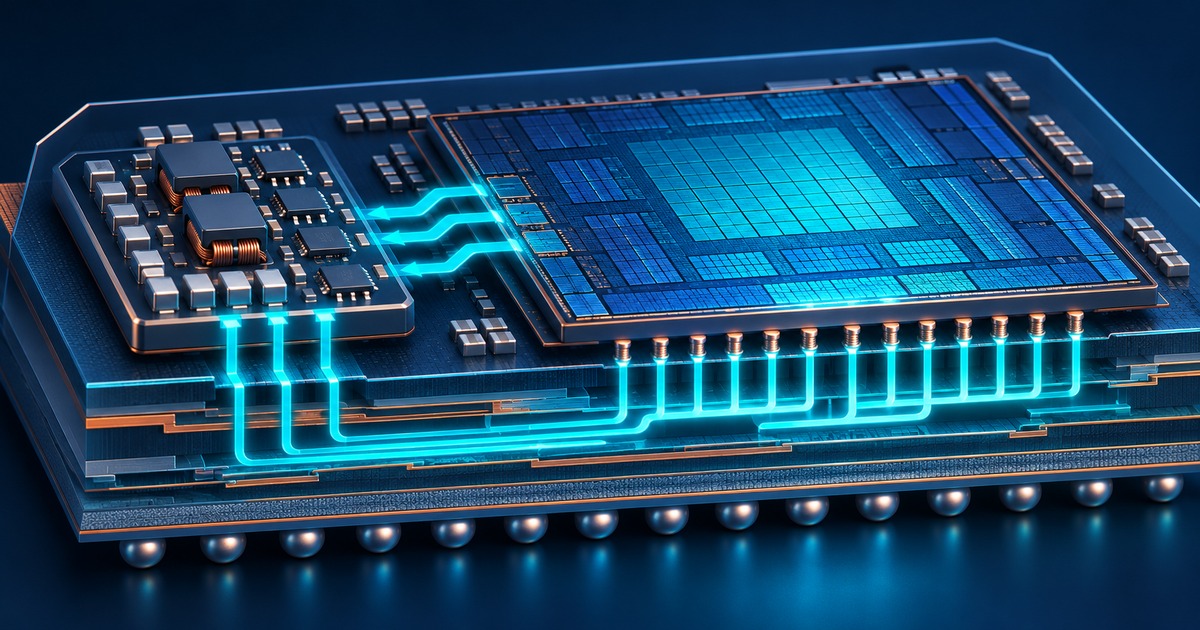
Ferric’s approach combines the controller, transistors, inductors and capacitors in a compact module. Placing it closer to the processor can shorten part of the current path. It also creates engineering work, including how to remove heat and test the module with a specific accelerator. The practical question is how the system behaves under sustained load and during abrupt workload changes that require the regulator to respond quickly.
Which figures describe the deal and which are targets
onsemi says the design can reduce the board area used for regulation by 50–70% compared with conventional designs using discrete components. That is the company’s comparison of board area. It does not imply an equivalent percentage reduction in accelerator or data-centre electricity use. An energy comparison would need to measure equivalent work and account for power conversion, cooling and other components.
In the announcement, onsemi raised its 2030 AI data-centre revenue target by $500 million to more than $3 billion. That is a management target. The initial transaction price is $600 million, with the additional payment contingent on future milestones. For accelerator buyers, the value of the technology will depend on specific products and published measurements under comparable workloads. The signed agreement establishes the direction of the investment, while the announced benefits remain to be tested in deployment.