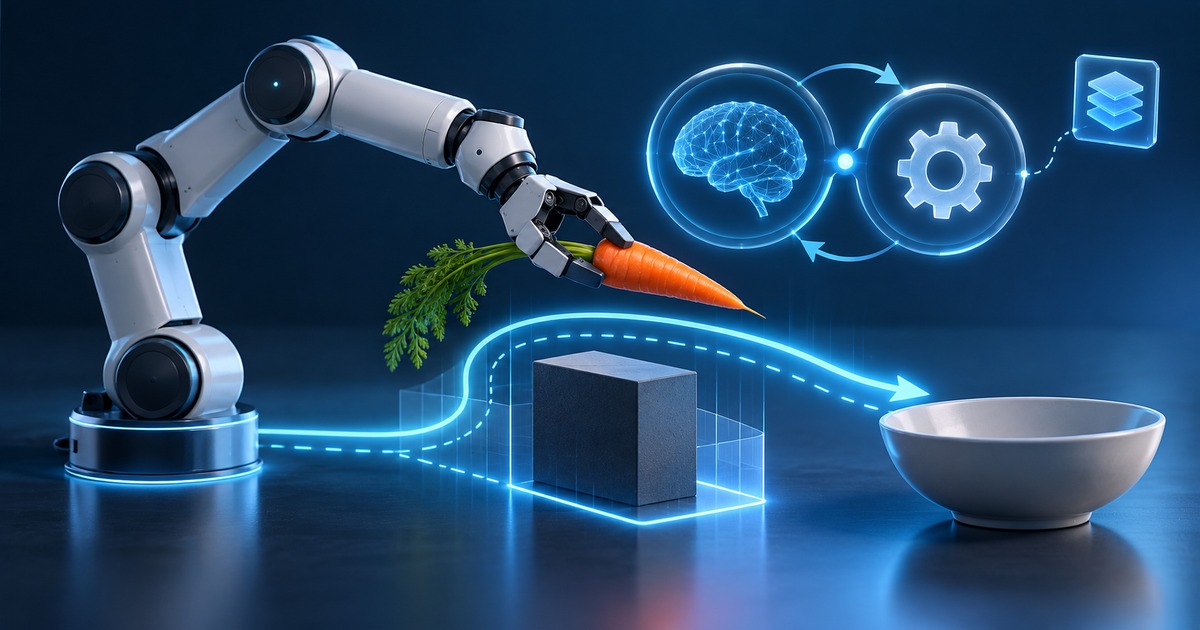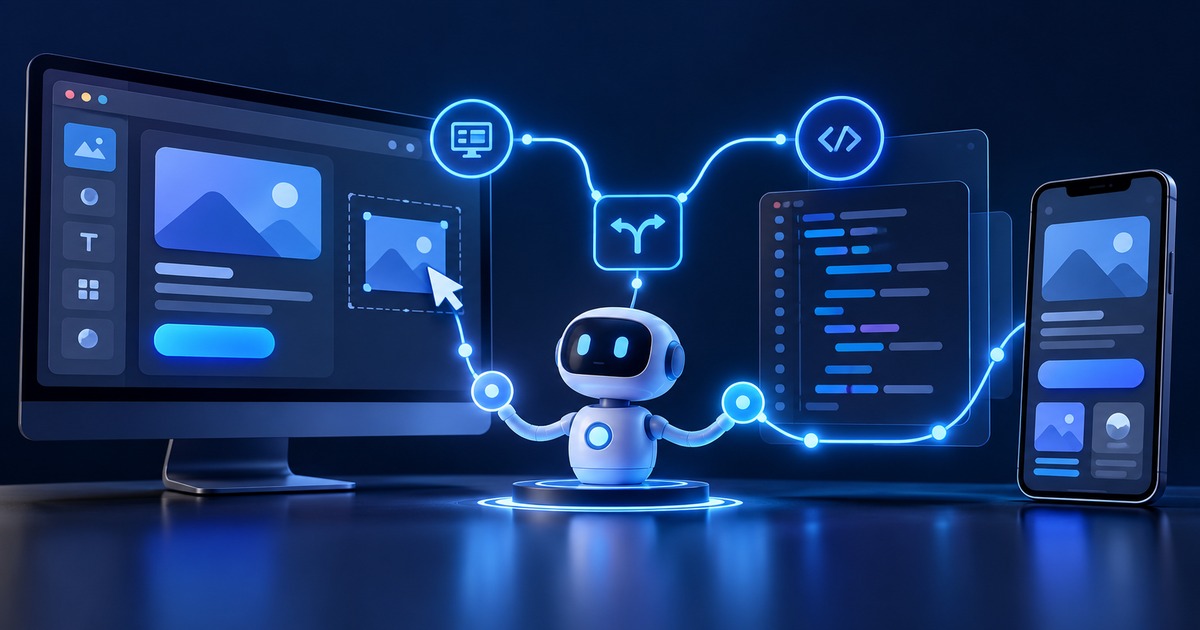
Alibaba Token Hub’s MAI-UI team has released OpenGCUA, a research stack for agents that operate computers through graphical and programmatic interfaces. The report was submitted to arXiv on October 15, 2026, and describes an initial, unfinished release. An important qualification appears in the paper itself: this version does not yet include a trained model of its own. The development is an open stack, rather than a new set of model weights.
What can be examined
The repository contains implementation code, prompts, trajectories from eight models, and OSWorld examples. Its code is labelled Apache 2.0. Early real-device components and a shared SDK are also available. They expose how an agent uses its tools; availability does not guarantee readiness for every working environment or application.
The official project page includes comparative demonstrations involving a form and hotel research. It warns that playback speeds differ. Video duration should therefore not be treated as measured task time. That comparison requires the stated conditions and actual clocks rather than judging which edited presentation looks quickest.
Why counting clicks is insufficient
The authors report a mean improvement of 19.6 points in OSWorld-v2 partial score and 53% fewer steps against batched GUI-only execution. These are author-reported measurements in a particular setup, not an independent SIExpo evaluation. Fewer reported steps do not automatically imply an identical reduction in elapsed time, tokens, or cost.
A spreadsheet illustrates the practical distinction. A person might select cells with a mouse while a program checks formulas. A useful agent needs to choose an appropriate route and establish that the resulting file is correct. Finishing faster while changing the wrong sheet creates no useful saving. This is our explanatory example, not a task we have reproduced using OpenGCUA.
The boundaries around a common interface
Our editorial interpretation is that freedom to choose a tool increases the importance of explicit access boundaries. Reading information, changing a document, and sending it to an external recipient are different actions. A common SDK can make them easier to program, but authorization for each remains a separate question. Technical convenience does not itself establish the intended recipient or the scope of a user’s request.
For a local evaluation, we would preserve the input file, expected outcome, and evidence of completion. Timing should include recovery after an error, while cost should include repeated attempts. Human interventions should also be recorded. Those are proposed comparison criteria, not a new benchmark or a recommendation to grant unrestricted access to a working computer.
OpenGCUA makes engineering choices more accessible for study. The strongest current conclusion concerns implementation transparency and the opportunity for reproducible evaluation. The preprint and preliminary components remain a research step. Neither a proprietary trained model from the team nor universal reliability has been established by this release. Readers can inspect the published work while keeping those distinct questions open.
Editorial verification: 2026-10-18T16:11:34.881843+00:00 (UTC). Cover: conceptual AI illustration, not a documentary photograph.