On 13 October, Physical Intelligence introduced the Pi API beta. Teams upload robot data, adapt a model on infrastructure managed by the company and access the trained behavior through a hosted interface. The company shows partner applications from Japan, Switzerland and the United States, while identifying connectivity difficulties in some early deployments.
What changes for a robotics team
Our reading is that the service shifts part of the machine-learning workload to a provider while leaving the physical process with the builder. Appropriate data, robot integration and validation of actions are not replaced by an API key. For a team without extensive compute infrastructure, this could change where a project begins.
Rather than first building an entire training platform, a team could begin with a tightly bounded task and demonstrations. Those examples need to represent the real operating range: different object arrangements, permitted deviations and situations in which the robot should stop. This is a proposed approach, not a result from our own Pi API test.
A demonstration versus an operating service
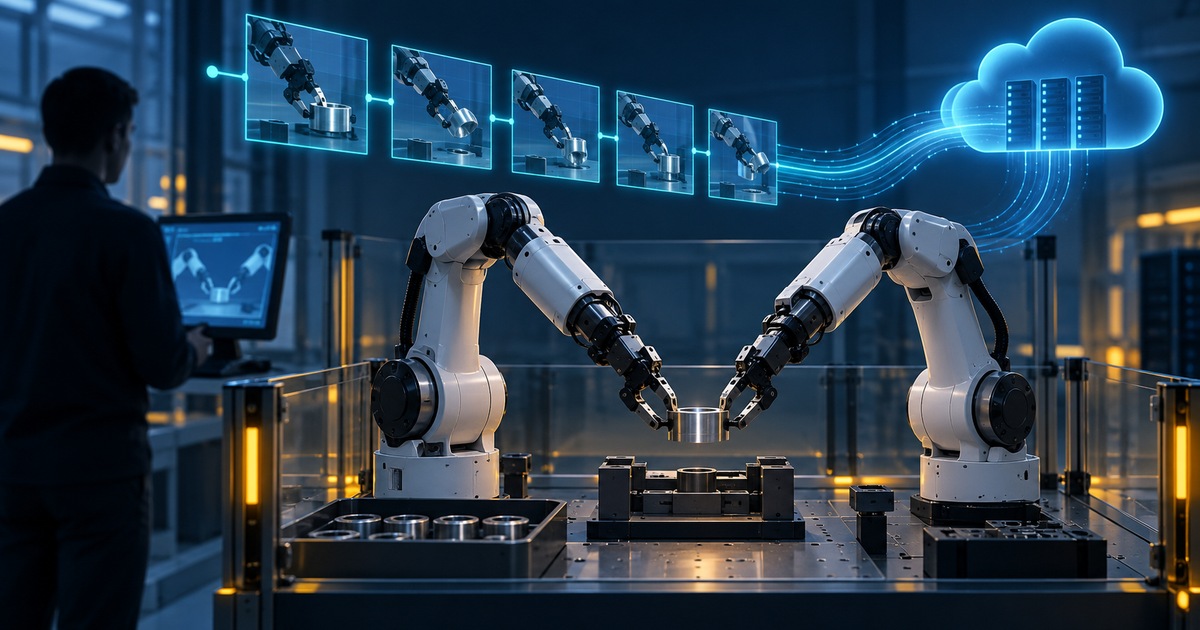
The official post shows Almond using a dual-arm robot to process components for its own construction after four days of API iteration. This is a specific company example, not evidence that any manufacturing task takes four days to solve. We do not infer a general reliability or safety rate from selected videos.
The practical boundary could be checked using situations withheld from training. An apparently identical component might arrive at a different angle. If evaluation includes only a familiar arrangement, a successful recording offers limited evidence about everyday variation. Success, failure and safe interruption need separate definitions.
Access remains phased
The application form says onboarding starts small and proceeds in batches. It asks about experience with training and physical robots, available data and success criteria. This is an application for beta access, rather than instant public enrollment with guaranteed capacity. SIExpo has not applied and does not have confirmed access.
The public openpi repository supplies background on earlier models and expert checkpoints. Its documentation warns that particular trained versions may not work on a different robot configuration. That is not a description of every new API model, but it explains why compatibility must be established on a particular device.
Cloud inference and local safeguards
For a network-dependent process, our proposed test includes delayed or interrupted connectivity. Behavior should be observed in a controlled environment: how motion stops, how the job is recovered and who authorizes continuation. Reliability of a protective function should not be inferred from the model's apparent quality.
The economic question also concerns the whole process. Data preparation, integration, verification and future changes matter alongside the service price. The beta is a step toward more accessible adaptation of robotic models. It does not establish that hardware, infrastructure or safety have become universally solved problems.
A useful project record would retain the model version, training-data version and conditions of each evaluation. When performance changes, this would help distinguish a new policy from a changed camera, tool or task. This is our operational recommendation, not a promise that the beta already provides every such audit feature.
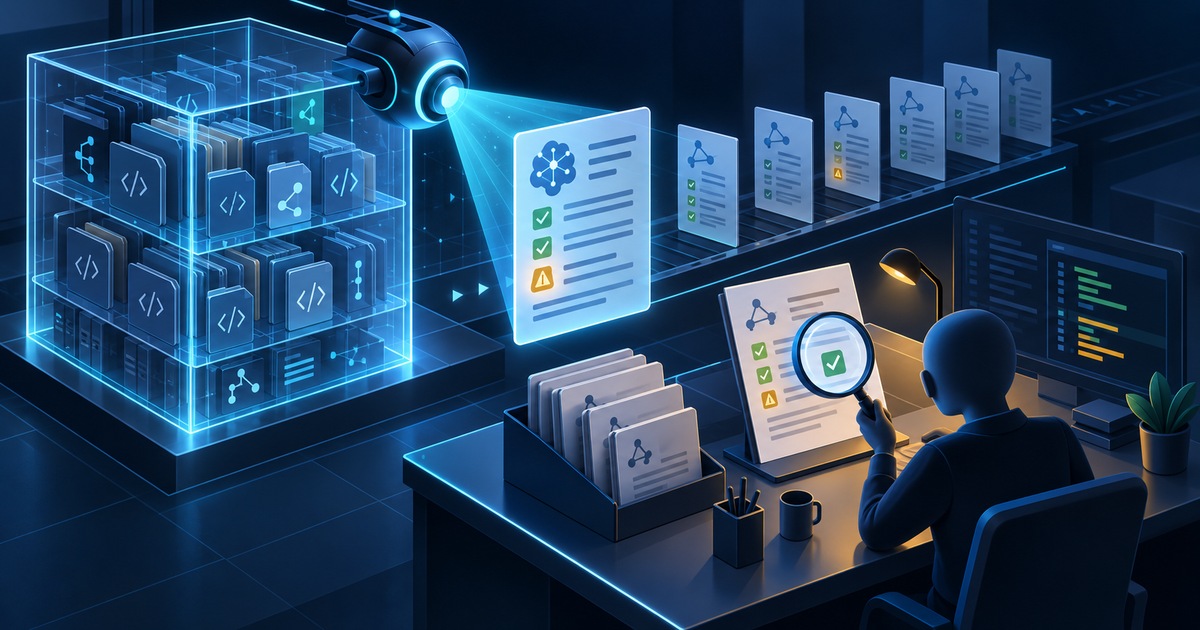
Sources were read on 14 October 2026 between 09:25 and 09:35 Europe/Sofia. Assessments and proposed checks are editorial analysis; SIExpo has not independently tested the product. The cover is an AI illustration, not a photograph of an actual event.