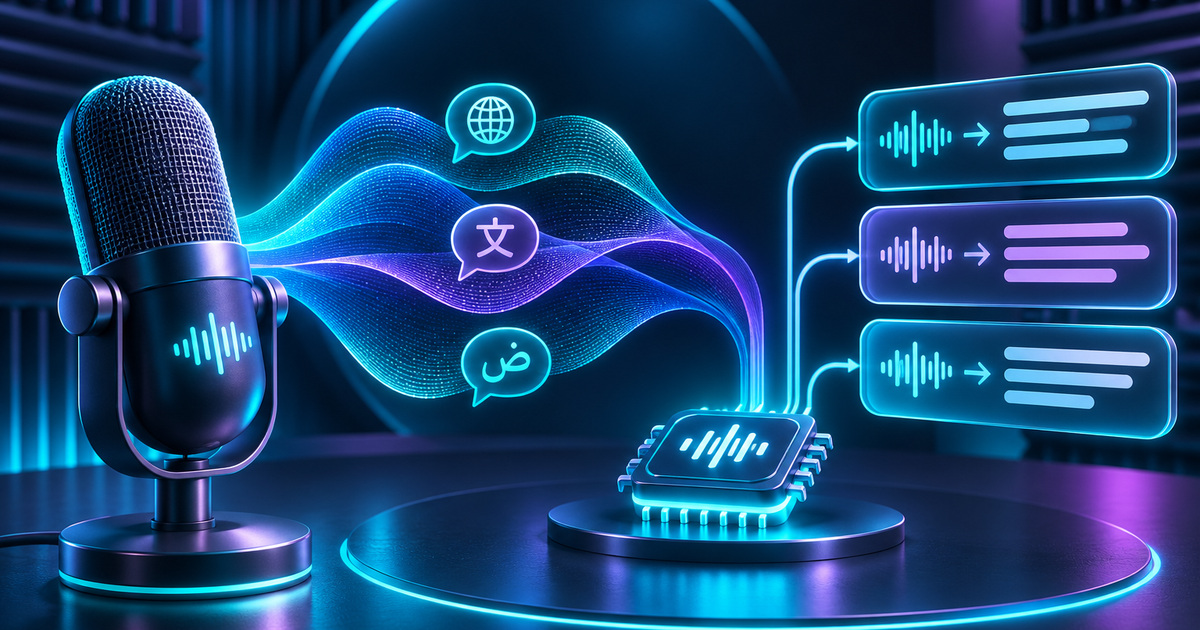
Reson8 introduced Rumble-2-Flash on November 18: an open speech-recognition model with roughly 0.5 billion parameters and claimed support for more than 40 languages. Its announcement specifies an Apache 2.0 license and integration with Transformers and vLLM. Accuracy and speed figures are the team's measurements; SIExpo has not run an independent comparison.
A small model meets real audio
The model card provides a separate reference for using the published package and understanding its scope. Before deployment, read it alongside the exact environment version. Library compatibility does not remove requirements concerning memory, audio format or the supported way of submitting recordings.
Recognizing words is different from interpreting intent. A transcriber can produce a fluent sentence containing an incorrect amount, negation or personal name. In downstream automation, one such error may matter more than several missing filler words. This is our proposed evaluation criterion, not an observed defect in the new model.
The card describes controls for writing numbers, retaining fillers and preserving repetitions. These support different transcription conventions. A fair comparison must keep conventions consistent: an edited transcript and a verbatim record cannot be treated as the same output.
What a useful evaluation looks like
We suggest including clean recordings, telephone channels, background noise and speaker changes whenever those conditions belong to the intended workload. Keep a human reference and label errors in critical fields separately. An overall word-error percentage can conceal poor performance specifically on order numbers or addresses.
For Bulgarian work, test the language using real recordings that you have permission to process. A general multilingual claim is insufficient evidence for a particular quality level on Bulgarian dialects, mixed-language speech or specialized terminology. We provide no such guarantee and do not infer language coverage solely from the headline language count.
Make the comparison operationally fair. Use the same recordings and transcription conventions, keep hardware settings documented and include the time a reviewer needs to repair output. A short clean clip is useful for checking that a pipeline runs, but it cannot represent every noisy customer conversation.
From transcription to an action
For a system that creates an order or fills a field from speech, we would separate recognition from committing the final record. Show the source beside the extracted value and allow disputed words to be corrected. This workflow example reduces dependence on one flawless machine answer; it establishes no medical or legal suitability.
The development is the availability of a small model and a published route into existing software stacks. Its practical value will depend on accuracy on the actual audio stream and time to checked text, including necessary human corrections.