On November 11, 2026, Salesforce presented SFR-AutoR&D for code and model-training experiments. It describes embedding research while customer-deployment preparation continues. It has not announced an update delivered to every customer.
Who defines the task
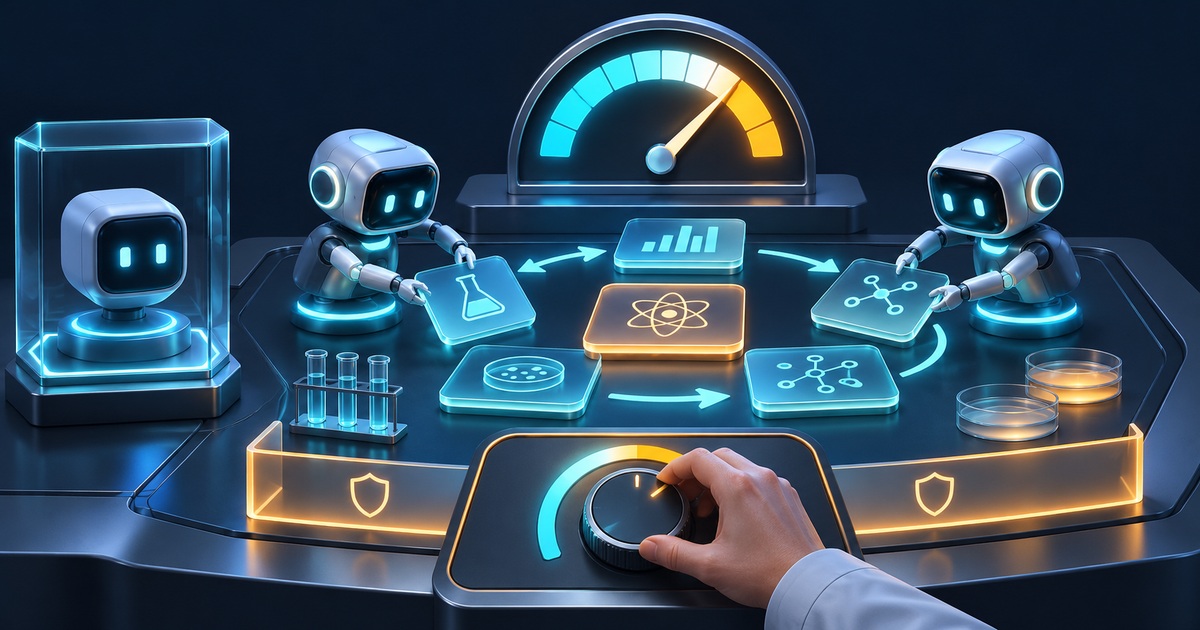
Researchers set the goal, budget, evaluation and data constraints. Agents propose and test changes within those boundaries. Automating the choice of the next experiment does not mean the system independently decides which uses of its results are acceptable.
TrainForge organizes ideas, implementation, training and evaluation. Candidates move from LoRA checks to larger training runs, with separate evaluation sets and checkpoint-bound evidence. There is no promotion without verified improvement. Its interactive platform is forthcoming, and part of the demonstrated idea lineage is illustrative.
Readers can therefore distinguish a research method, a measured result and a publicly available product. A demonstration video does not establish that every external team can already reproduce the complete workflow through its own account.
Evidence means more than faster code
AutoR&D-Engineer addresses improvements to existing systems. Its documentation discusses pandas, hnswlib and USearch while retaining comparisons with a baseline implementation. One example avoids a temporary array in pandas row-wise reductions while preserving reduction order. For that particular optimization, the authors report a 1.38-times median speedup and differential checks covering values, masks, dtypes and exceptions.
These are author-reported results under specified workloads, not an independent SIExpo benchmark. A publicly proposed patch is also different from an accepted upstream change or a release already installed by users. Adoption status requires a separate check.
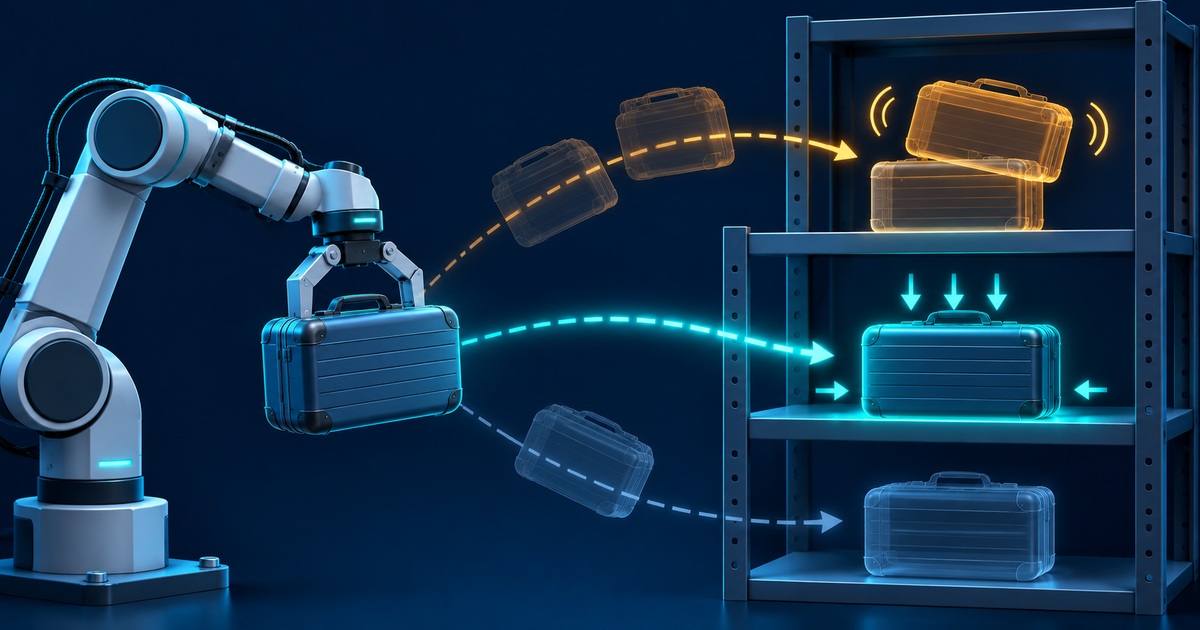
Our editorial interpretation is that an optimization agent needs at least two evaluation axes: behavior and execution cost. Reduced runtime is useful when the program preserves its required contract for inputs, outputs and errors. A test that merely establishes that a program does not crash does not verify that contract.
Infrastructure remains separate from the researcher
AutoInfra serves experiments through a shared training interface and GPU resources. Its description separates algorithm environments, the training service and rollout sandboxes, including their Python and package installations. Requests, progress and results are persisted so that an interruption at the gateway does not erase the experiment history.
This is the authors’ architectural approach to isolation, not an independent security certification. The useful boundary is that an agent can propose a change to a copy of a system without automatically gaining freedom to alter the infrastructure that evaluates its own work.
What remains to be established
For an external team, evaluating such a process starts with a task defined in advance. A team could select a particular retrieval scenario, freeze its evaluation set and compare candidates with an unchanged baseline. Failed attempts also belong in the record: a selected successful result alone does not reveal the overall cost of the search.
A separate decision then determines whether an improvement belongs in the real system. That includes data review, compatibility, resource constraints and the ability to restore the previous version. These are editorial evaluation criteria, not additional Salesforce product promises.
The significance of the announcement lies in combining automated proposals with an experimental record. Autonomy here means organized work inside human-set boundaries. Whether it produces a better customer-facing product is established after the research result, rather than by the research loop’s impressive description alone. SIExpo has not run the agents, reproduced the optimizations or audited Salesforce’s production environment.
Sources: Salesforce — R&D agents and embedding model research, Salesforce AI Research — TrainForge, Salesforce AI Research — AutoR&D-Engineer, Salesforce AI Research — AutoInfra.
The cover is a conceptual AI illustration, not a documentary photograph.
Editorial verification: 2026-11-12T07:52:16.361310+00:00.