NVIDIA published a technical overview of four specialized Cosmos 3 Nano variants on November 5. This original analysis is prompted by that explanation of their operating modes, rather than a fresh release of every checkpoint: the Sim-Auto model card lists October 20, 2026. The distinction matters to readers deciding what they can already try and what has only just been announced.
Four different jobs
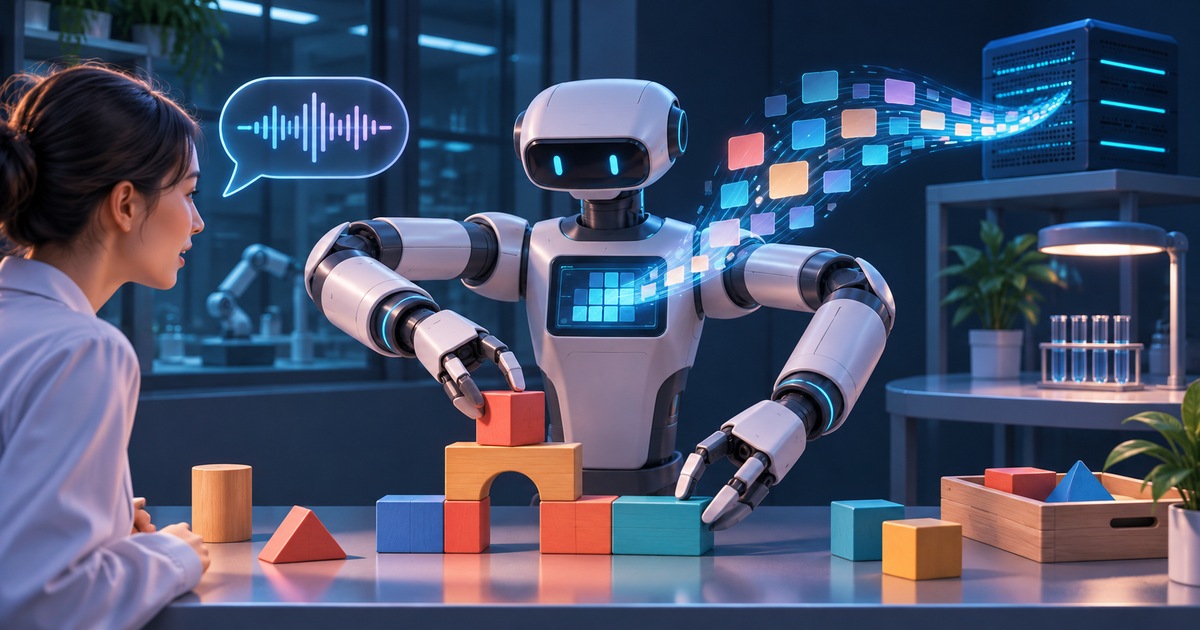
The overview distinguishes Transfer-Auto for synthetic driving data, Sim-Auto for successive driving observations, Sim-Transfer for visuals derived from simulator controls, and Sim-Bimanual for video conditioned on robot actions. These are specialized tools, rather than one universal replacement for a physical environment. A team choosing between them should begin with the inputs it possesses and the output it wants to measure.
The Sim-Auto card describes joint camera and LiDAR generation controlled through a World Scenario Map, with support for up to 11 cameras. Output playback frame rate is not inference throughput; published throughput measurements depend on configuration. Calling a system interactive therefore does not establish that a particular machine can run a particular scenario fast enough for the intended experiment.
A convincing clip is not sufficient
Our editorial interpretation is that the value lies in the connection between an action and its consequence. Consider a test policy that turns after detecting an obstacle. If the generated view looks convincing but the obstacle changes position without justification, the policy assessment becomes misleading. A system can produce an attractive image while remaining a poor instrument for that particular experiment.
We would therefore separate evaluation into several questions. Do different sensors agree? Do objects persist over time? Does the scene respond consistently to the controls supplied? This is our proposed assessment approach, not a result from our own Cosmos testing. A visual-quality score should not automatically stand in for all these checks. The intended use determines which failure matters most and which evidence would count as success.
Data is part of the system
NVIDIA’s separate repository data contract requires a prepared local bundle rather than an arbitrary folder of recordings. It describes aligned observations and actions, calibration, units and episode separation between training and evaluation. It explicitly distinguishes static validation from actually decoding a sample. This provides useful context for the work involved in adapting the system to a different robot.
For an in-house robot arm, for example, we would trace one short recording from the camera through to the final input tensors. If a close-gripper command has its sign reversed, longer training will not repair the meaning of the data. Timing matters in the same way: a frame from before a movement and an action from after it can form the wrong learning pair. This example and recommendation are our engineering analysis, not a reported failure in the released models.
What is established
We checked the public overview, model card and data documentation. We have not run the model or independently confirmed its performance. A practical next step would be to choose one bounded scenario, preserve its inputs and settings, and compare the generated observations with a separate reference recording. Only then should a team decide whether expanding the simulation adds value for its task. Repeatability and relevant error measurements provide a clearer basis for that decision than an impressive demonstration alone.