One character, several different systems
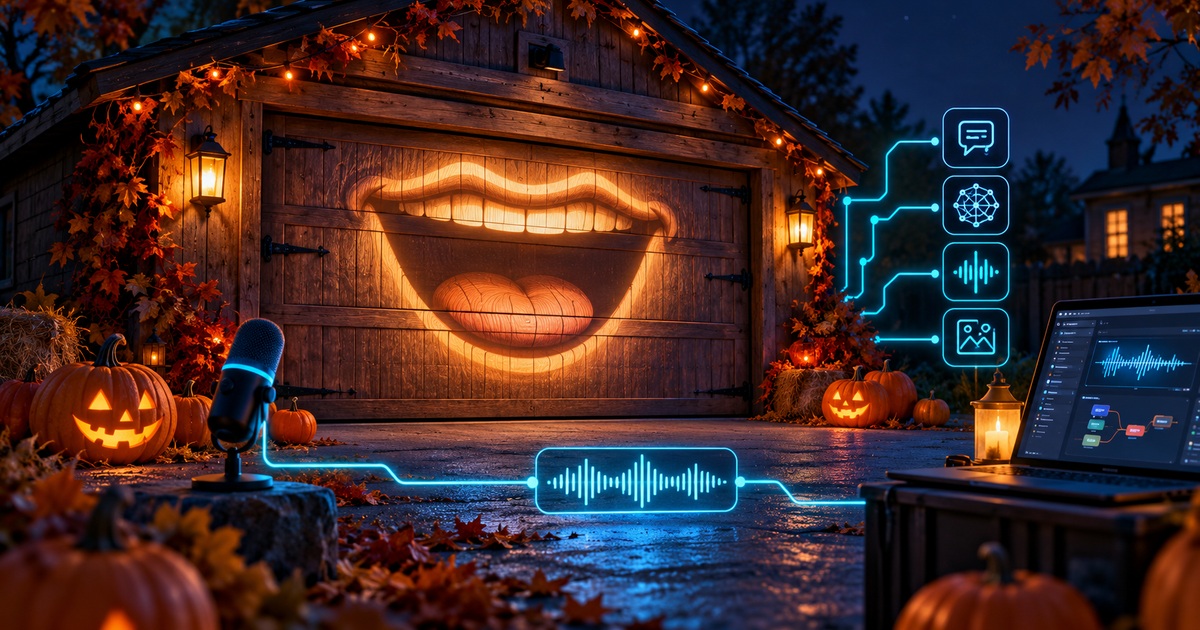
In an October 30 post under NVIDIA's Hugging Face organization, Rick Grandy describes MonsterHouse, an interactive projection that makes a garage door a speaking character. It is a personal engineering project by a company employee, not a mass-market product or an installation independently tested by SIExpo.
The account separates speech recognition, response generation, voice synthesis and animation. The word agent therefore does not mean one model performing every task. Nemotron Voice Agent provides a foundation, while application behavior and additional customization shape the character.
Available models do not equal a finished performance
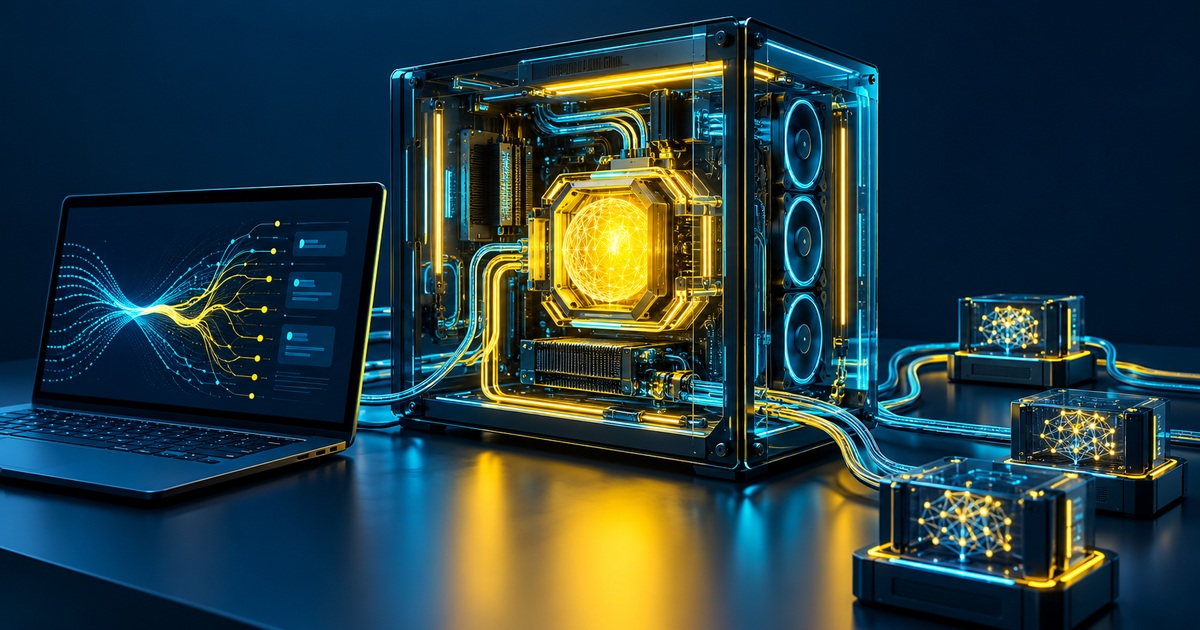
The Nemotron Voice Agent repository provides example configurations for different voice applications. Their hardware and software requirements vary. A cloud-service profile and a local execution profile should not be presented as interchangeable in access, memory or dependencies.
Audio2Face-3D is a separate collection of models and tools for deriving facial animation from sound. The availability of those components helps explain how a system can be assembled, without removing scene development, synchronization and control work.
Grandy explicitly says that MonsterHouse itself has not been packaged for public release. This article therefore does not promise that readers can download and run the identical house.
Where latency becomes noticeable
Consider an editorial scenario: a visitor asks a question, recognition finishes, the model produces a reply, the voice begins and the projected character must move at the right moment. A good language-model response time alone cannot establish natural conversation. People experience the total wait and the gaps between stages.
For such a prototype, we would measure elapsed time from the end of speech to audible output, behavior with background noise, and recovery after a component disconnects. These are proposed checks, not our experimental results. Prepared lines can offer predictable behavior for common situations, but should be distinguished from newly generated dialogue.
It would also be useful to test interruptions. A character that keeps speaking after a visitor changes their mind may have excellent generation speed yet still provide an awkward interaction. Application state and the ability to stop output belong in the evaluation alongside the model.
What the demonstration does not establish
The author distinguishes a synthetic visual test from trials with real visitors and nighttime lighting. Character and mood design are not evidence of reliable understanding in every situation. Example timing figures should not be transferred to other equipment or workloads.
The interesting lesson is architectural. A convincing voice character needs state management, audio-visual synchronization and a practical route for human intervention. Local hardware gives control over execution; the experience depends on the entire pipeline. SIExpo treats this as an integration demonstration, with turning it into a supported service remaining a separate engineering task.