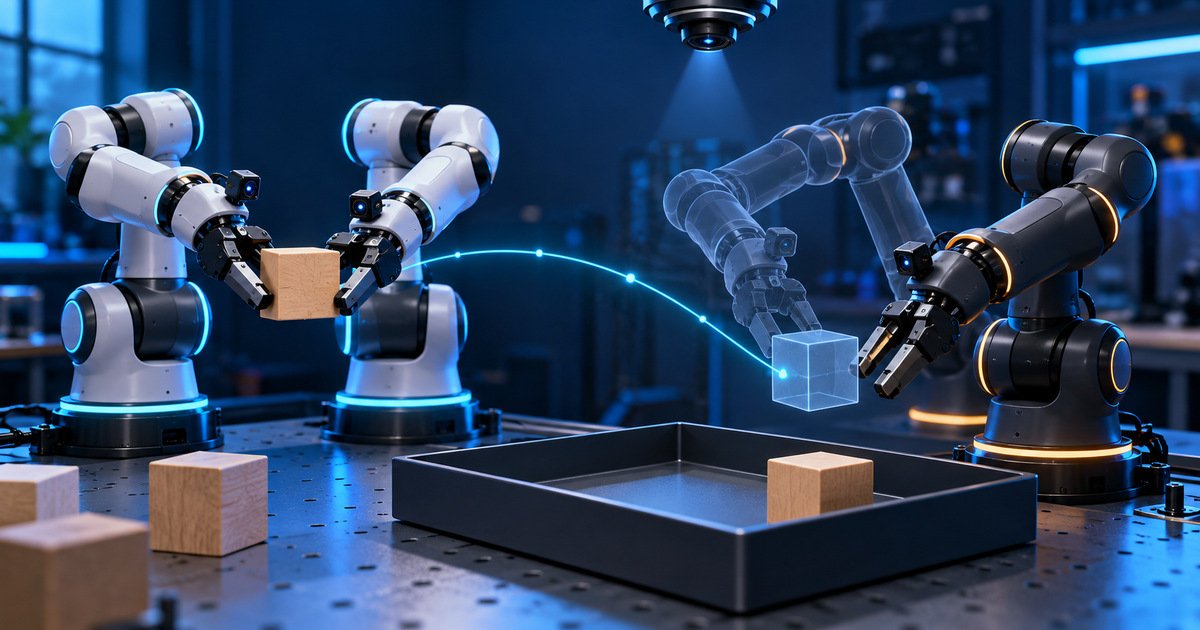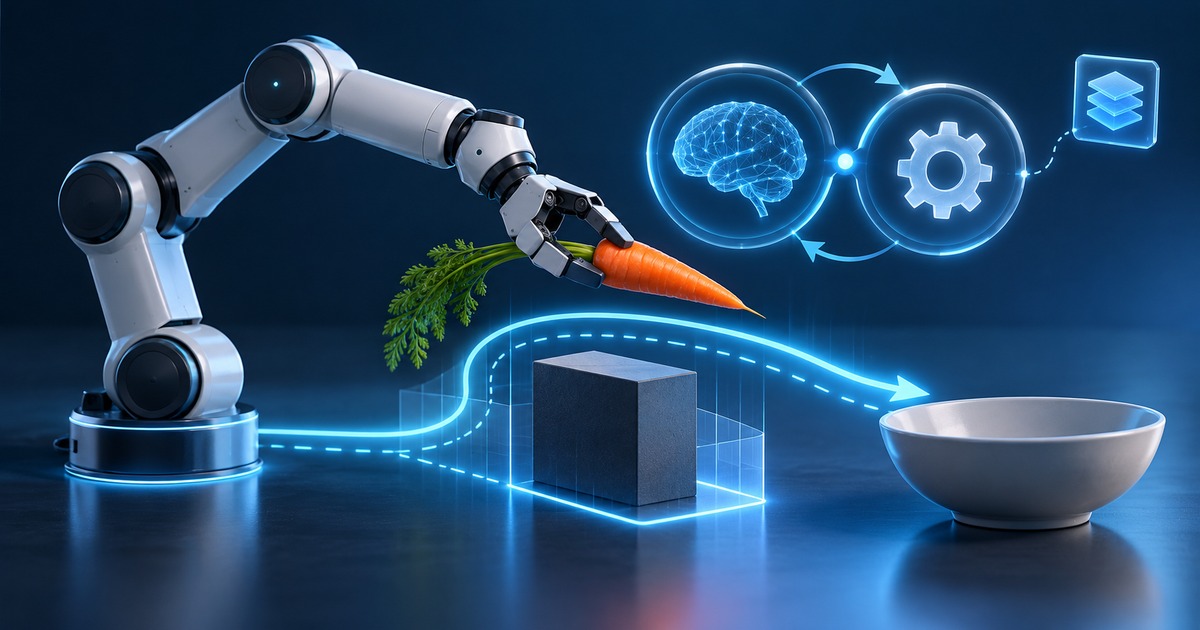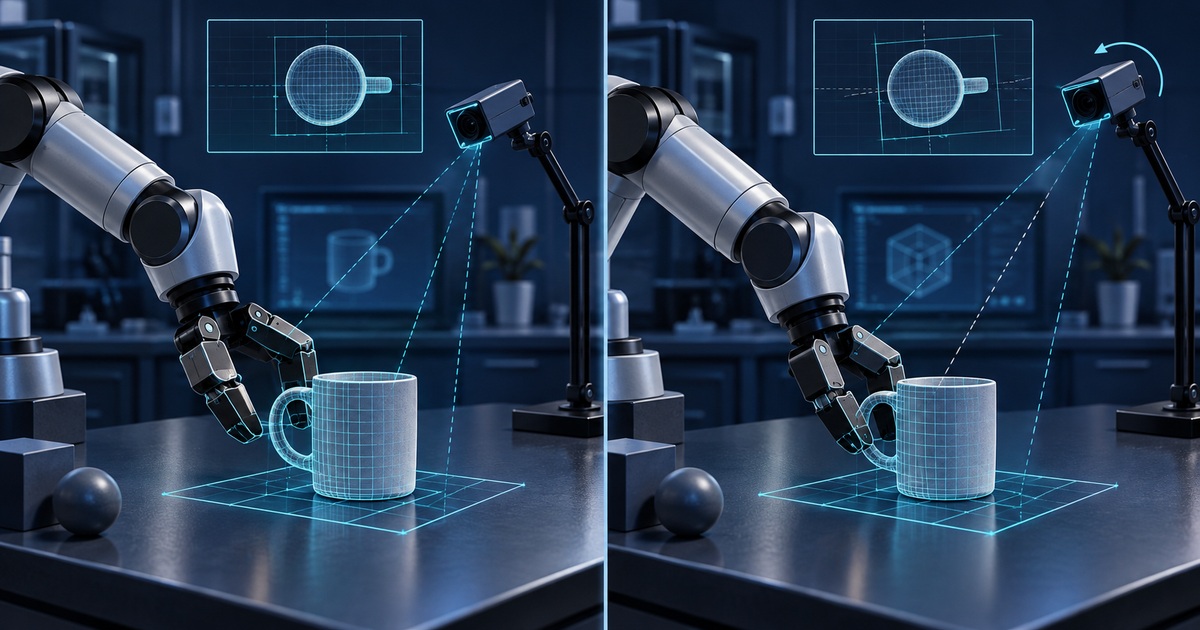
Mundo connects images, simulation and video in a model of a particular place
The research project separates spatial state from generated imagery. Its demonstrations and published limitations do not establish readiness for real robots.

Search by Synapse
A bilingual news publication covering artificial intelligence.
Free news, analysis and guides in Bulgarian and English. Published by FalcoSoft ITS.
121–160 of 160 stories · Page 3 of 3

The research project separates spatial state from generated imagery. Its demonstrations and published limitations do not establish readiness for real robots.


Ai2 presents an interface for evidence-grounded proposal revision. Its small study measures literature grounding, rather than future scientific breakthroughs.

The research release separates pretraining compute from total project cost and exposes evaluation limits. Small size does not replace task-specific validation.

Public files enable local geometry-refinement experiments. The input mesh, scale, licence and limits of hardware validation remain essential.


Microsoft and Hugging Face report more consistently successful tasks but fewer solved at least once. Code and benchmark results do not establish reliability for real customers.

Ai2 releases annual embeddings and a browser Explorer. The data is not a live map; historical coverage, licensing and local validation remain essential.

A new presentation brings together earlier work on requests, charging and routing. Results come from simulations rather than an announced operational city fleet.

The agent platform supports drug-discovery research. Company cell-model results, computational benchmarks and future laboratory automation have distinct evidential boundaries.

NVIDIA publishes technical details, code and weights for time series. DARR adds historical context; reliability still needs evaluation for each horizon and use case.

NVIDIA presents a research environment for surgical robotics. Public code and convincing video do not establish safe treatment of patients.

Ai2’s new benchmark measures decision robustness when demographic information and persuasive arguments change.

The new ALTK-Evolve report shows gains with GPT-4.1 without weight updates. Its comparison uses a specific October snapshot, rather than every agent available today.

The preprint reports gains across 22 benchmarks. Its public code requires attention to Python execution and access to external services.

The startup announced funding and access to its robotics model. We examine how to assess skill transfer without turning a demonstration into a promise of universal performance.

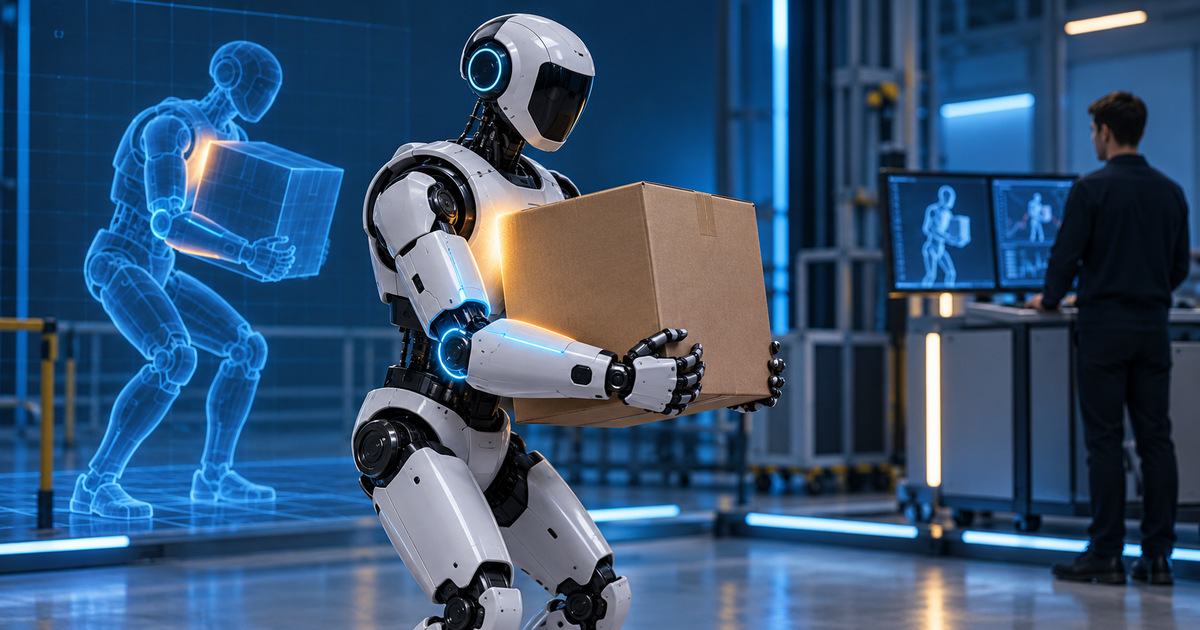
The study reports 45 successful trials out of 50 in defined tasks. Carrying a box does not establish a fully autonomous warehouse worker.

DMIS Lab released 150M and 380M encoders plus a separate embedding variant. A 32K context does not automatically establish Bulgarian support or make the base checkpoint a ready classifier.

The October 16 study describes low-cost monitoring. Its reported percentages measure agreement with another classifier, rather than detection of every real instance of misuse.

Kyutai, Inria and École des Ponts released a robot-control research stack. Its code and model weights have different licences, and reported improvements remain specific to the experiments.

The October15 preprint separates choosing an appropriate task from carrying it out. Safety and recovery figures concern defined experiments, not a guarantee for a household robot.

An October 18 feature highlights materials retrieval with AI. The underlying paper describes structure–text alignment, with uneven results across tasks, rather than a proven new battery.

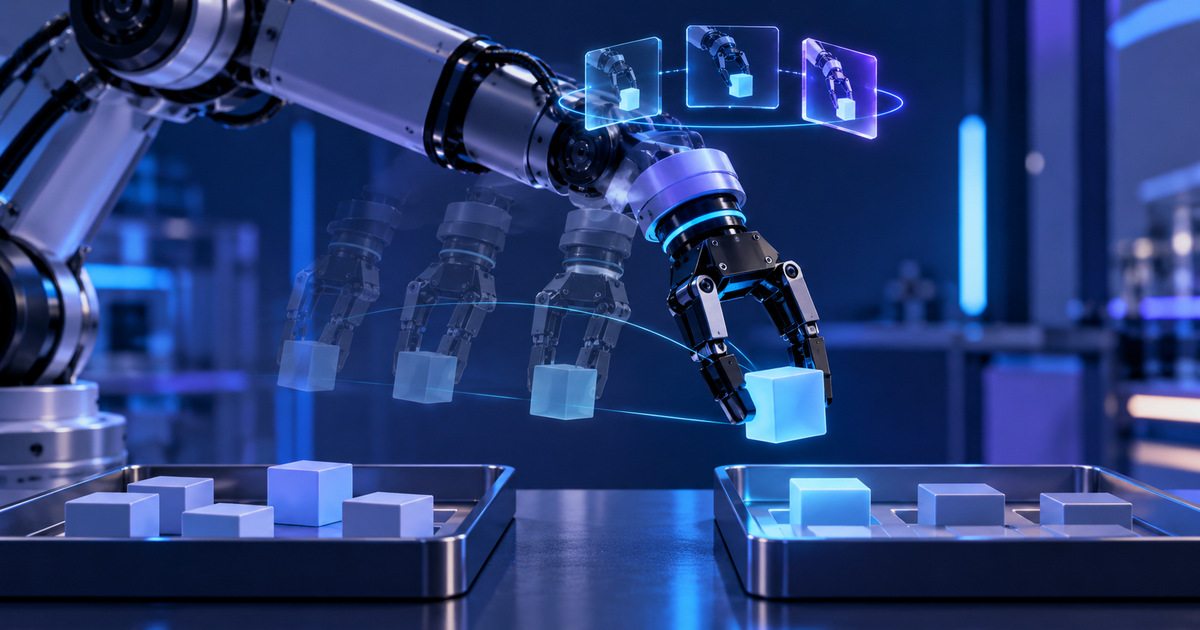
Research from Amazon FAR and the University of Maryland combines autonomous interaction data with a world model. It does not establish general dexterity after a few minutes of total training.

The initiative covers 22 languages. Its public engineering documentation can be inspected, while the accompanying pages disagree about whether the full corpus is already released.

The eight-task study compares qubits and logical operations. A cheaper circuit is not a completed quantum computer, and improving one resource can require spending more of another.

The 14 October test puts scores alongside time and cost. Its eight tasks offer a useful initial sample rather than coverage of all robotics.

A persistent digital twin checks context before execution. Dye demonstrations are infrastructure research, while human oversight remains part of the process.

The public version accumulates repairs in a skill library. The new release, earlier research and limits on physical robots are distinct parts of the story.

The model has 2.8 trillion total and 80 billion active parameters and remains in post-training. Pre-training results are not a user-facing product benchmark.

The workflow connects data sources and structural analysis. The crucial distinction is between a computationally supported hypothesis and an experimentally established effect.

The research framework separates retained experience from retries and tests transfer to new conditions. Successful practice is not treated as proof of readiness for a real deployment.

The institute’s new communication examines learning during AI collaboration. The underlying PNAS paper dates from September and reports associations rather than universal causal proof.

The study measures tests passed and cost in a specified environment. We distinguish the ProgramBench result from a general promise of cheaper software development.

Ai2 has published an updated climate emulator and research models. The key boundary is agreement with a reference simulation, not confirmation of individual future events.

The geospatial agent connects specialist tools and maps. Experimental access and workflow evaluation do not establish a finished answer for every location.

The new preprint evaluates robustness under hardware changes. Its results concern a simulation benchmark, rather than a universal assessment of physical machines.

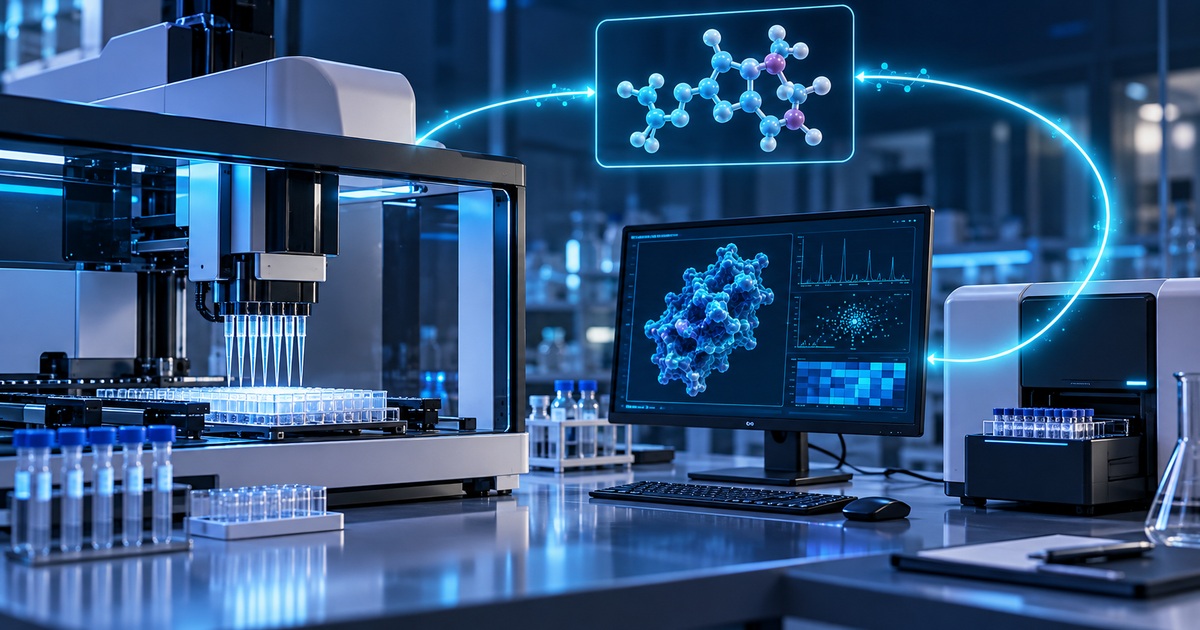
The collaboration starts with selected scientific instruments. Its goal is a model–experiment loop; faster discoveries or treatment outcomes have not yet been established.

How to distinguish a laboratory capability from a real incident, and what that means for protecting small devices.

The research connects workflow search with training on selected executions. Results remain preliminary, and transfer to other tasks is uneven.

The research evaluates multi-step work and adherence to business rules. Its test results do not guarantee reliable automation in every real deployment.

Materials produced by an internal AI model are available on GitHub. Lean formalizations cover part of the collection rather than every result.

A look at attention and the research that introduced the Transformer architecture.
We distinguish news from analysis and possibilities from promises. We provide context and links to original sources.
About Super Intelligence ↗