ASPIRE v1.0 opens robot-skill code; 99% in simulation is no universal guarantee
The public version accumulates repairs in a skill library. The new release, earlier research and limits on physical robots are distinct parts of the story.

Search by Synapse
A bilingual news publication covering artificial intelligence.
Free news, analysis and guides in Bulgarian and English. Published by FalcoSoft ITS.
481–540 of 542 stories · Page 9 of 10

The public version accumulates repairs in a skill library. The new release, earlier research and limits on physical robots are distinct parts of the story.


NVIDIA announces the laptop launch. Large shared memory and Windows on Arm tools open possibilities that still need evaluation against users’ own workloads.

The two-stage design analyses conversations on-device with consent. Phased application rollout and effectiveness under real conditions remain to be verified.

The proposal includes 23 AI technologies in a package of 40. Consultation ends on 15 November; final rules, interim registration and product access are different questions.

The model has 2.8 trillion total and 80 billion active parameters and remains in post-training. Pre-training results are not a user-facing product benchmark.

816 billion parameters, text output and a specific license. Downloadable weights, hosted APIs and the two-Mac Studio configuration are distinct deployment choices.

Reflection releases Beam under Apache 2.0. Self-hosting and visible Mirror activity provide choices while preserving the need to assess actual task outcomes.

Swiss AI published its technical walkthrough on 15 October. The new document should not be confused with the first release of the already available model weights.

The workflow connects data sources and structural analysis. The crucial distinction is between a computationally supported hypothesis and an experimentally established effect.

The joint pilot focuses on finding useful pages and recognizing changes. Discovery, ranking, citation and an actual reader visit remain different outcomes for publishers.

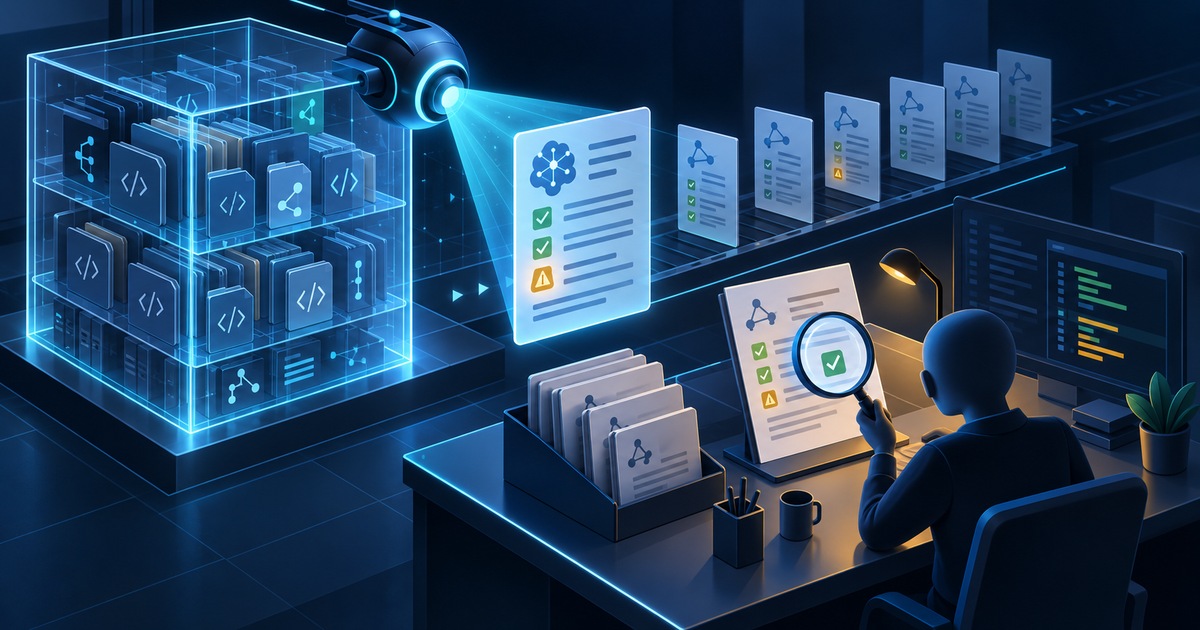
The research framework separates retained experience from retries and tests transfer to new conditions. Successful practice is not treated as proof of readiness for a real deployment.

Six evaluators receive access comparable to internal risk teams. Anthropic describes publication rights without a veto, alongside narrow redaction categories for sensitive information.

Super VL combines text and visual documents, while Bolt targets local tasks. We examine availability, numerical formats and the limits of vendor comparisons.

Axonex introduced a wheeled robot for educational activities. We separate company-described features and validation plans from demonstrated learning outcomes.

The institute’s new communication examines learning during AI collaboration. The underlying PNAS paper dates from September and reports associations rather than universal causal proof.

The study measures tests passed and cost in a specified environment. We distinguish the ProgramBench result from a general promise of cheaper software development.

We checked the files, history and serving recipe. API access predates the weight upload, while the current documentation requires careful distinction between context limits.

Officials confirm an investigation, while Faktor.bg reports two arrests. We distinguish public confirmation from allegations, explain the limits of antenna counts and examine why the Polish case does not prove a shared operation.

Ai2 has published an updated climate emulator and research models. The key boundary is agreement with a reference simulation, not confirmation of individual future events.

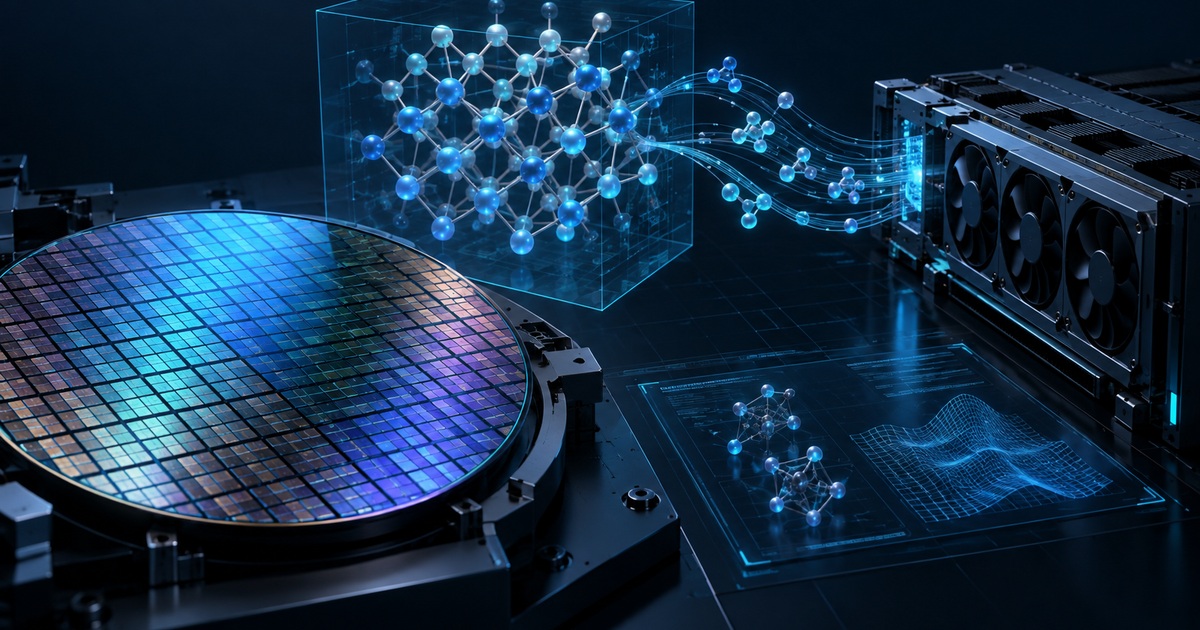
The library is in early access. We distinguish faster computation from model accuracy and a demonstrated improvement in a semiconductor fab.

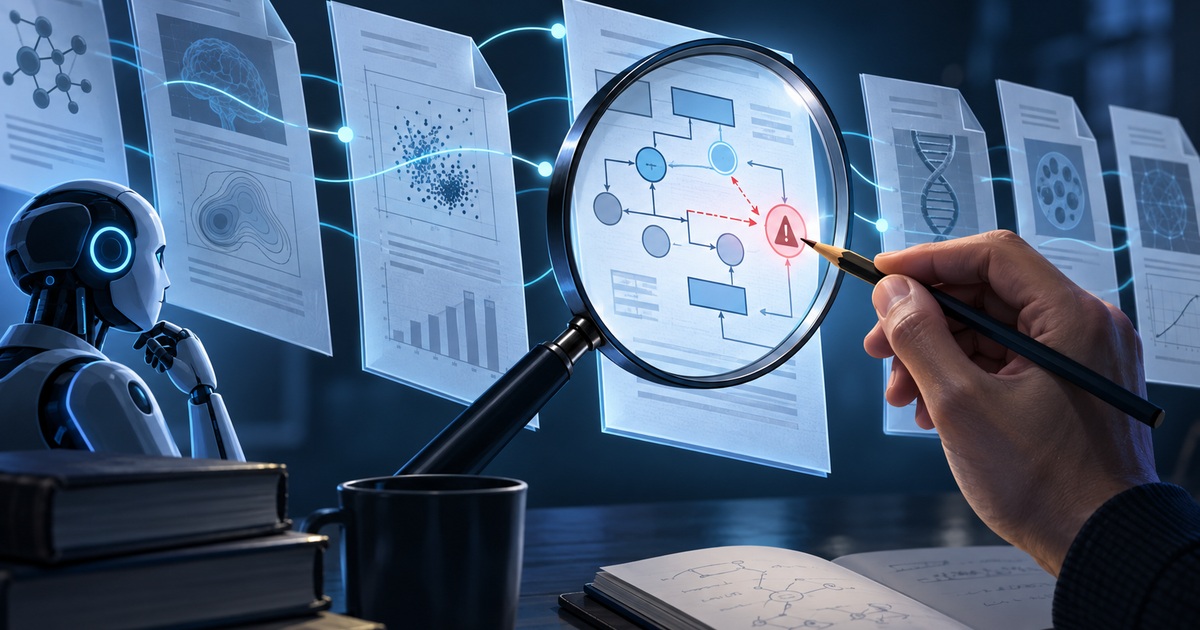
The technical-document tool is expanding access. We examine the boundaries between a suggested criticism, an established error and a final expert assessment.

The geospatial agent connects specialist tools and maps. Experimental access and workflow evaluation do not establish a finished answer for every location.

The new voice generation arrives with an automatic change to the current alias. We checked documentation and an independent index without treating a benchmark as a promise for every call.

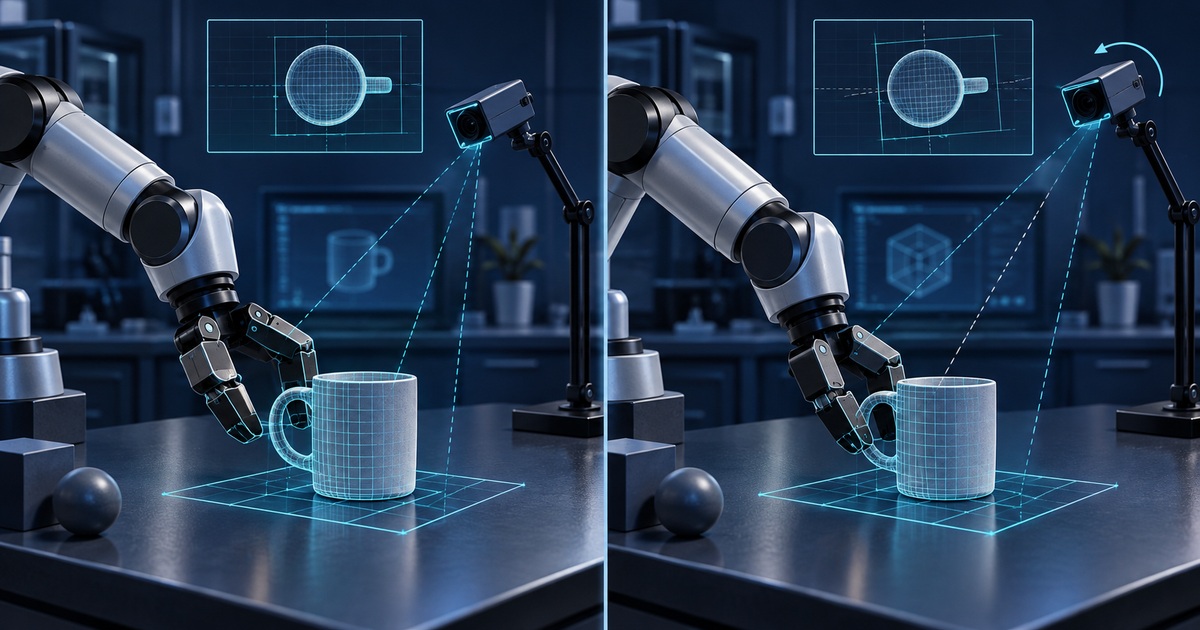
The new preprint evaluates robustness under hardware changes. Its results concern a simulation benchmark, rather than a universal assessment of physical machines.

The fourth annual study compares leaders and employees. Its US survey responses are self-reports; relationships between management and outcomes do not establish causation.

The collaboration starts with selected scientific instruments. Its goal is a model–experiment loop; faster discoveries or treatment outcomes have not yet been established.

The German company proposes a shared model for physical action. Its Berlin demonstration is still ahead; industrial reliability requires separate measurements.

OpenAI says it has no indications of model weights, code or customer data being taken. We separate the timeline, allegations, company assessment and AI’s role.

The service launched on 8 October, with rules clarified on 13 October. Rapid automated findings differ from human-validated vulnerabilities.

Google announced a global rollout on 13 October. Its model card and API documentation do not establish error-free autonomous operation.

The 13 October framework connects confirmed intent with the payment lifecycle. It is a control and integration proposal, not an established universal standard.

The 13 October announcement describes managed infrastructure for model adaptation. Access is phased, and cloud inference brings concrete connectivity questions.

The 13 October model offers downloadable weights and 24 billion total parameters. Compute efficiency, memory, privacy and licensing require separate checks.

Accountability, provenance and truth are different checks. We examine Deb Roy’s argument and a practical newsroom example.

A proposal for international oversight: the evidence, boundaries and procedures needed to assess AI risk.

How to distinguish a laboratory capability from a real incident, and what that means for protecting small devices.

The 13 October methodology focuses on work completed by agents. Signal65’s Arm-commissioned report separates measured server performance from modeled rack-scale results.

The 13 October project combines MI355X and ROCm. We examine infrastructure choices and the checks needed before practical use.

Public code and documentation show how robot commands and control priority work. The SDK is not an emergency stop or a guarantee of safe autonomy.

A dedicated unit and enterprise product integrations are planned. The announcement sets direction without publishing measured outcomes across all deployments.

OCP announcements connect optical modules, cooling and rack design. Advertised capacity remains a design claim, not a result from our own testing.

The plan was announced on 12 October. Pooled usage applies to Grok models; third-party models in Cursor continue to be charged separately.

The two models launch through the API and Muse Code. Documentation describes a large context window alongside limitations in spatial reasoning and long tasks.

The robotics ecosystem enters the Washington exhibition. We examine device coordination, partner integration and what it means for an operator to retain control.

The European presentation includes public NGP test rides. We examine the link between models, vehicle hardware and the evidence needed beyond a demonstration.

Mistlabs announced an assistant for Apple devices following $26 million in funding. We checked its features, data rules and conflicting timelines for future hardware.

The next Maia generation targets inference at scale. We explain the architecture figures and why the company’s performance comparisons need careful interpretation.

The new blueprint treats agent execution and model inference as different workloads. We examine the architectural idea and the measurements that matter before deployment.

The X post is new, but purchasing was announced in August. Verified documents distinguish finding a product, authorizing spending, and completing an order.

The research connects workflow search with training on selected executions. Results remain preliminary, and transfer to other tasks is uneven.

The new model scores predefined options. What does that mean for applications, confidence measurement, and control of AI workflows?

Managed Deployments takes over cloud-worker operations. Teams still need to decide how permissions, secrets, observability, and application behavior fit together.

The report raises a practical question: how can an agent's consequences be contained when it seeks ways to finish a task beyond its authorized scope?

An in-depth account of front organisations, checking contributor identities, and the distinction between public distribution and proven influence, with context, sources and practical editorial conclusions.

The research evaluates multi-step work and adherence to business rules. Its test results do not guarantee reliable automation in every real deployment.

OpenAI models will support agents across Atlassian and Rovo, with an emphasis on connecting enterprise context to specific work.

Materials produced by an internal AI model are available on GitHub. Lean formalizations cover part of the collection rather than every result.

OpenAI describes flashcards and quizzes while preparing an application-planning tool. The initial College Planner experience is intended for US students.

Intelligent UI combines text, graphics and interactive elements. Availability is rolling out gradually and differs by reasoning mode and plan.

How to consider quality, limitations and risk when using AI in a real process.
We distinguish news from analysis and possibilities from promises. We provide context and links to original sources.
About Super Intelligence ↗